Shop the Collection

To help you build your own global archive, we've prepared this collection of watercolor studies from our research into Fes, Morocco. These artifacts are designed to bring the stillness of this corner of the world into your home.

Original Series Decorative Magnet

A personal study of Fes, Morocco, captured in high-fidelity watercolor and prepared for your collection.

Fes, Morocco | Original Series Decorative Magnet
Add to Collection / $18
Exclusive Series Artifact

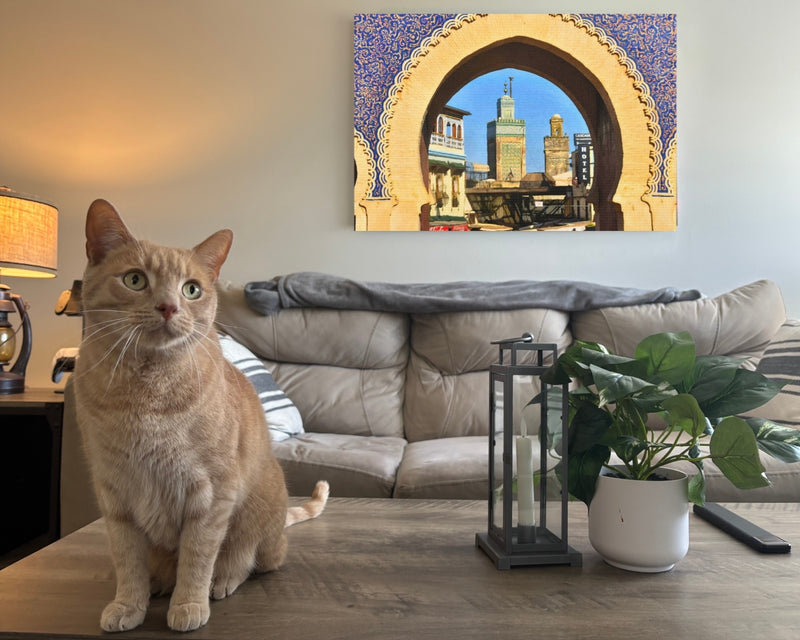
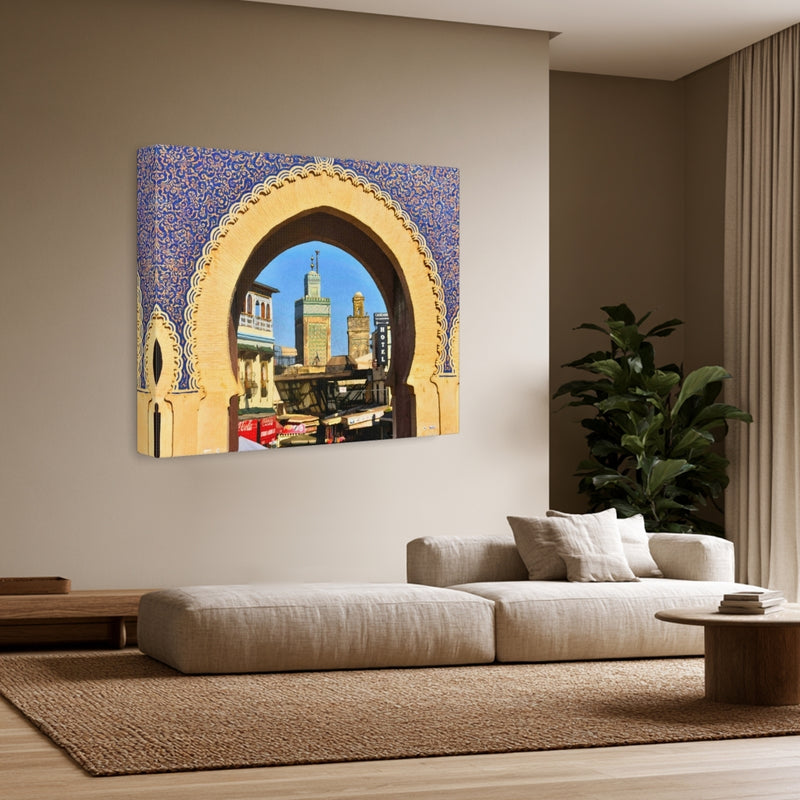
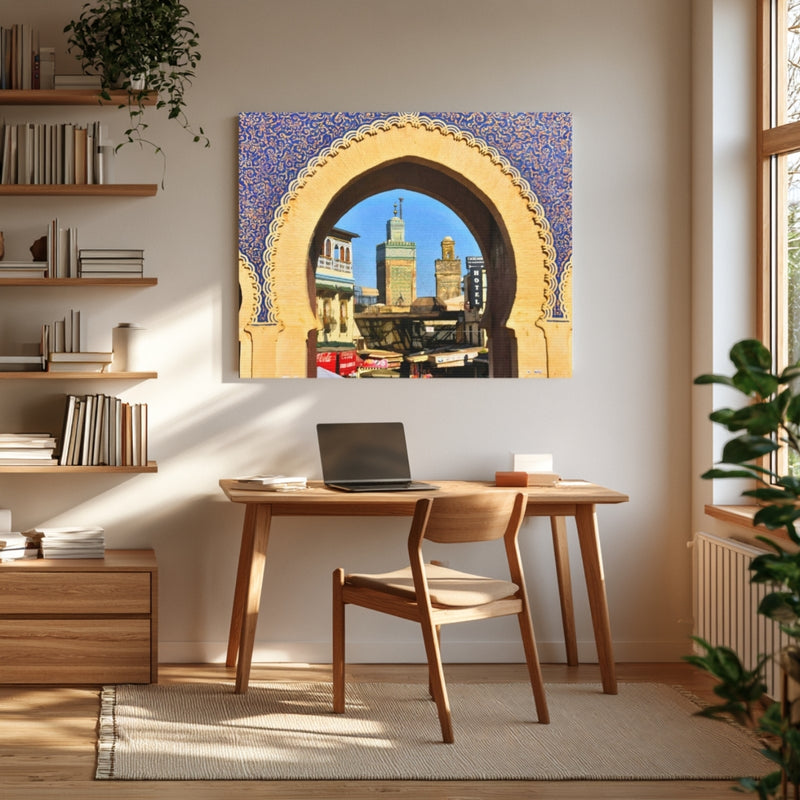
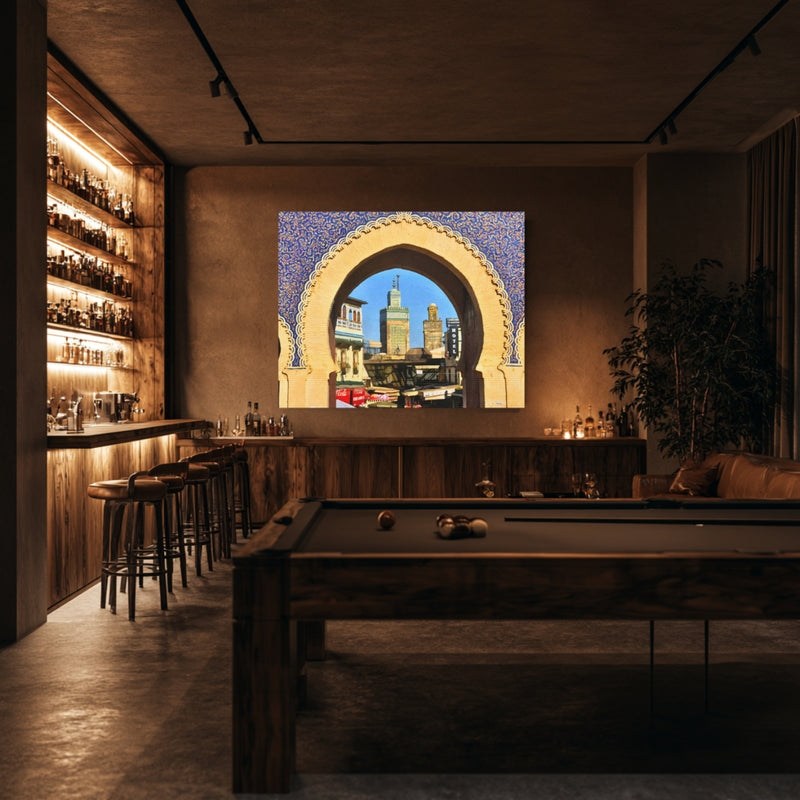
Original Series Gallery Canvas

This high-fidelity canvas is a beautiful way to anchor a room and keep your memories of Fes, Morocco fresh long after you've returned home.

Fes, Morocco | Original Series Gallery Canvas detail Fes, Morocco | Original Series Gallery Canvas detail Fes, Morocco | Original Series Gallery Canvas detail Fes, Morocco | Original Series Gallery Canvas detail
Add to Collection / $65

Original Series Hardboard Coaster

A personal study of Fes, Morocco, captured in high-fidelity watercolor and prepared for your collection.

Fes, Morocco | Original Series Hardboard Coaster
Add to Collection / $18
Exclusive Series Artifact

The Spirit of the Land

Archival Note: A curated field study of Fes, Morocco, prioritizing the specific atmospheric stillness of the region. These artifacts have been meticulously sourced from our global archival partners to represent the area’s unique cultural frequency and environmental character. This selection serves as a formal observation for our ongoing global archive, vetted for its visual accuracy and archival merit.

Fes, Morocco study No. 01
Fes, Morocco / 01 VIA / Aleks
Stepping onto a balcony overlooking the historic Chouara Tannery, you are immediately greeted by an incredible tapestry of ancient craftsmanship and vibrant tradition. There is a deeply peaceful rhythm to how the artisans work, moving gracefully between the stone vessels just as their ancestors did centuries ago. Watching the golden sunlight wash over the earthen rooftops of Fes, it’s impossible not to feel a profound sense of awe and connection to a living, breathing history.
Fes, Morocco study No. 02
Fes, Morocco / 02 VIA / Tomasz Anusiewicz
A sense of quiet wonder washes over you as you look out at the perfectly still water, reflecting a graceful row of palm trees like a mirror. The soft afternoon light bathes the distant architecture, capturing the same timeless, peaceful spirit found hidden within the ancient corners of Fes and Morocco's historic oases. It is a beautiful sanctuary that invites you to pause, breathe deeply, and appreciate a landscape untouched by the rush of the modern world.
Fes, Morocco study No. 03
Fes, Morocco / 03 VIA / Miguel Alcântara
Standing before this magnificent carved facade in Fes, you can’t help but feel a profound reverence for the master artisans who poured their souls into every geometric swirl and delicate line. The intricate stucco and wood details tell a story of devotion, patience, and a timeless pursuit of beauty that has endured through the centuries. It is a peaceful, grounding experience to look closely at these patterns, finding a sense of quiet harmony in how beautifully every single detail fits together.

Where to wander

Archival Note: A curated field study of Fes, Morocco, prioritizing cultural relevance and archival merit. While we haven't touched down here yet, we’ve meticulously vetted these locations through our global network of contributors to ensure they represent the most authentic atmosphere for your own expedition.

Local Cuisine Spotlight
Gathering around a table in Fes to share a traditional breakfast brings an immediate sense of warmth, comfort, and genuine connection. Sharing plates of fresh scrambled eggs, rich olive oil, dark olives, and crusty warm bread fosters a beautiful, peaceful rhythm of slow living and shared gratitude. It is a gentle reminder that some of life’s most inspiring moments are found in the simplest acts of hospitality and breaking bread together.
Credits: karim Ouakkaha
Local cuisine study in Fes, Morocco

☕︎ Local Flavor

Fes Street Food & Medina Culinary Tour

Rating: 5★ | Price: $$ | Coordinates: 34.0617° N, 4.9743° W

Three hours through the food geography of the medina with an expert local guide: the 400-year-old communal bakery (furan) where neighborhoods still bring their dough each morning, the bessara (fava bean soup) stall that has occupied its corner for generations, the briwat and milawi vendors in the spice souks, and the mejoul date sellers by the Bab Bou Jeloud gate. Fassi cuisine is distinct from anything else in Morocco — shaped by Andalusian refugees, Amazigh traders, Jewish artisans, and French protectorate influence — and this walk is the fastest way to acquire a working understanding of what makes it one of the most sophisticated urban food traditions in the Islamic world.

View Entry Details

Fassi Cooking Class with Market Souk Visit

Rating: 4.9★ | Price: $$$ | Coordinates: 34.0617° N, 4.9743° W

A morning in the spice souk sourcing ras el hanout, preserved lemon, and the saffron whose specific cultivation in the Talaouine region is inseparable from Fassi cooking identity, followed by a private kitchen session decoding the distinctive dishes of Fassi haute cuisine: the bastilla (pigeon pastry dusted with powdered sugar and cinnamon), the honey-and-onion-braised lamb, and the seven-salad spread that precedes every Fassi meal. The techniques encode a culinary tradition transmitted through family kitchens for a thousand years, and the meal at the end is one of the most complex and satisfying lunches available in Morocco.

View Entry Details

Palais Bab Sahra

Rating: 4.9★ | Price: $$$ | Coordinates: 34.0619° N, 4.9749° W

Situated near Bab Bou Jeloud in a restored 18th-century palace, this is the most celebrated restaurant kitchen in Fes el-Bali — the one address that consistently appears on every serious list of Fassi dining. The bastilla au pigeon here is the standard against which every other version in Morocco must be judged: the layered warka pastry, the braised pigeon, the almonds, the cinnamon, the powdered sugar — a dish that documents the entire history of Andalusian-Moroccan culinary fusion in a single plate. The interior — hand-painted cedarwood ceilings, mosaic courtyard, candlelit lanterns — is as good as the food.

View Entry Details

Cafe Clock

Rating: 4.8★ | Price: $$ | Coordinates: 34.0609° N, 4.9726° W

A legendary multi-floor riad restaurant in the heart of Fes el-Bali that has operated as an unofficial cultural embassy for the medina since 2006 — hosting storytelling evenings, Gnawa music performances, language exchanges, and calligraphy workshops alongside some of the best cooking in the medina. The camel burger has become a Fes institution, the Moroccan brunch is the finest in the city, and the rooftop terrace looking out over the medina roofscape is one of the most pleasant places to eat lunch in Morocco. Come for the tagine of the day and stay for the 5 PM storytelling hour if you can.

View Entry Details

🛌︎ Boutique Stays

Riad Fes Relais & Châteaux

Rating: 4.9★ | Price: $$$$ | Coordinates: 34.0650° N, 4.9734° W

A five-star palace in the heart of Fes el-Bali, operating under the Relais & Château designation — which in this case means 30 suites arranged around a series of private courtyard gardens, an indoor hammam and spa of genuine excellence, and a rooftop terrace with uninterrupted views across the minarets and roofscape of the medieval city. The building is a 19th-century Andalusian-Moorish mansion whose carved plasterwork, zellige tilework, and inlaid cedarwood ceilings represent the apex of the Fassi craft tradition. The restaurant serves the finest interpretation of Fassi haute cuisine available in the city. Regularly voted one of the best hotels in Morocco for good reason.

View Entry Details

Karawan Riad

Rating: 4.9★ | Price: $$$$ | Coordinates: 34.0612° N, 4.9729° W

A former palace inside the medina, transformed into seven enormous suites arranged around a central courtyard whose intricate tilework, massive columns, and hand-carved cedarwood gallery are genuinely jaw-dropping. The location is strategic: on the perimeter of the medina close enough to the Bab Bou Jeloud gate that the labyrinth does not become a navigation problem. The breakfast spread is widely considered the finest in Fes, and the staff’s knowledge of the medina — which tannery terrace to ask for, which souk alley the best copper workers occupy — constitutes a navigational asset that no guidebook replicates.

View Entry Details

Riad Laaroussa

Rating: 4.8★ | Price: $$$ | Coordinates: 34.0634° N, 4.9713° W

A 17th-century palace in the heart of Fes el-Bali, built around a large central patio with a traditional hammam and spa, and a restaurant serving traditional Moroccan and Fassi cuisine from seasonal local ingredients. Each of its thirteen rooms is furnished with antiques and locally sourced textiles, and the combination of the private rooftop terrace, the spa facilities, and the kitchen’s commitment to the specific traditions of Fassi cooking makes it the most complete medina riad stay available at its price point. The 24-hour reception and airport transfer service make the logistics seamless.

View Entry Details

Dar Seffarine

Rating: 4.9★ | Price: $$$ | Coordinates: 34.0627° N, 4.9701° W

A 600-year-old gem positioned directly on the Seffarine Square — the brass and copper workers’ plaza that has been the soundtrack of metalwork in Fes since the medieval period. The sound of hammers on copper carries through the windows of the riad at all hours and is not a disruption but a form of immersion: you are sleeping inside an active medieval craft district. The riad’s 285+ glowing reviews consistently single out the hosts, the breakfast, and the impossibility of finding a more historically embedded address in the city. One of the finest boutique stays in Morocco at any price point.

View Entry Details

📍︎ Field Study

Fes Medina Private Walking Tour

Rating: 5★ | Price: $$ | Coordinates: 34.0617° N, 4.9743° W

The medina of Fes el-Bali is a UNESCO World Heritage Site and the largest car-free urban area in the world: 9,000 alleyways, some narrow enough to touch both walls simultaneously, organized around a logic that has not fundamentally changed since the 9th century. Walking it with an official local guide who navigates by memory is the essential activity of any Fes visit — without one, the labyrinth defeats most travelers within 20 minutes. The standard itinerary covers Bab Bou Jeloud, the Bou Inania Medersa, the Al-Qarawiyyin Mosque and University (exterior), the Nejjarine Fountain, the Al-Attarine Medersa, and the Chouara Tannery. Three and a half hours minimum; a full day is not too long.

View Entry Details

Chouara Tannery

Rating: 5★ | Price: $ | Coordinates: 34.0652° N, 4.9685° W

The Chouara Tannery is the oldest and largest of Fes’ three medieval tanneries — a honeycomb of circular stone vats filled with natural dyes in saffron yellow, poppy red, indigo blue, and pomegranate brown, where workers still tan hides using techniques unchanged since the 11th century. The view from the leather shop terraces above is one of the most extraordinary industrial scenes in the world and one of the most photographed. Come before 11 AM when the workers are most active and the colors are most vivid. Accept the sprig of fresh mint offered at the entrance — it is not a sales tactic but a practical courtesy.

View Entry Details

Bou Inania Medersa & Al-Qarawiyyin University

Rating: 5★ | Price: $ | Coordinates: 34.0640° N, 4.9737° W

The Bou Inania Medersa, built in the 1350s under Sultan Abu Inan Faris, is the finest piece of Marinid architecture in Morocco: polychrome zellige tilework on the lower walls, a band of Kufic calligraphy above, exquisitely carved stucco lacework above that, and magnificent painted cedarwood screens at the top — four materials, four registers, one perfect courtyard. Two minutes away, the Al-Qarawiyyin Mosque and University was founded in 859 CE by Fatima al-Fihri, a woman, and is recognized by UNESCO and the Guinness Book of World Records as the oldest continuously operating university on earth. The library holds manuscripts that predate the printing press by centuries.

View Entry Details

Merenid Tombs Sunset Viewpoint

Rating: 4.9★ | Price: Free | Coordinates: 34.0699° N, 4.9773° W

The 14th-century Merenid Tombs stand on the hilltop above Fes el-Bali and provide the only vantage point from which the full scale of the medieval city becomes legible — the entire roofscape of 9,000 alleyways, hundreds of minarets, and the green-tiled roof of the Al-Qarawiyyin arranged below you in a bowl that has been continuously inhabited for twelve centuries. The walk up takes fifteen minutes from the Bab Guissa gate. At sunset, when the call to prayer rises from every mosque simultaneously and the city turns gold, this is among the finest free experiences available in North Africa. Come early; the cats of Fes have long since claimed the best seats.

View Entry Details

Typography

Archival Note: A formal technical study of Fes, Morocco—archiving the coordinates, elevation, and environmental data that define the region. This data serves as a vital record for our ongoing global field study, allowing us to reconstruct the regional atmosphere with archival precision before our physical arrival.

Botanical and pigment specimen study for Fes, Morocco Colors of Fes, Morocco
Coordinates
34.0617° N, 4.9743° W — Northern Morocco, Middle Atlas foothills
Historical Epoch
Idrisid Dynasty — founded 789 CE by Idris I
Elevation
410 m / 1,345 ft — ancient imperial city in the Fes River valley below the Middle Atlas
Atmosphere
Mediterranean Semi-Arid (BSk) — warm dry summers, mild winters
Observation Hour
07:00 AM — Bou Inania Medersa at opening hour, zellige catching oblique light
Primary Pigment
Fassi Terracotta (#B85C38) and Chouara Saffron (#F4A824)
Best Time to Visit
March through May, September through November — the Fes spring and autumn are mild and clear, the medina is navigable before summer tourist pressure, and the Bou Inania light is perfect
Avoid Visiting
July through August — the Fes medina reaches 38°C in the narrow lanes with no airflow, the tourist density peaks, and the tannery smell intensifies significantly in the heat

The Local Tongue

Language is the invisible architecture of Fes, Morocco. These entries document the regional vocabulary—capturing the "texture" of local speech that standard translations often miss. Hand-curated expressions reflecting the specific spirit and daily rhythm of the region.
Archival study of Arabic cultural texture

via / Abdelali BOUZIANI

Primary Language Arabic
Regional Dialect Fassi Darija

Fassi (فاسي)

The demonym for a person from Fes — and the adjective applied to the city’s entire cultural output: Fassi cuisine, Fassi architecture, Fassi scholarship, Fassi style. To call something Fassi is to invoke twelve centuries of refinement, the accumulated taste of a city that was the intellectual capital of the Islamic west. It is the single most loaded adjective in the Moroccan cultural vocabulary.

Medina (مدينة)

The Arabic word for city — but in Fes it means specifically the ancient walled quarter, Fes el-Bali, which contains 9,000 alleyways and has been continuously inhabited since 789 CE. The Medina of Fes is not a preserved relic; it is a living city where families have occupied the same buildings for generations, craftsmen practice the same trades in the same souks, and the communal bread ovens (furan) have been firing daily for over four hundred years.

Bastilla (بسطيلة)

The signature dish of Fassi haute cuisine — a layered pastry of warka dough filled with slow-braised pigeon, almonds, egg, cinnamon, and powdered sugar. The name comes from the Andalusian Arabic “bastela,” and the dish is a direct descendant of the culinary tradition brought to Fes by the Moorish refugees expelled from Spain in 1492. Ordering it in Fes is ordering the most direct edible connection to that history available anywhere.

Wait! before you go...

Before you head over to Fes, Morocco, we’ve audited the essential data points for this corner of the world. These notes cover the logistics—from currency ratios to transit hubs—to help you navigate the landscape with clarity.
🚲 Getting Around No vehicles operate inside Fes el-Bali — the medina is navigated entirely on foot, with donkeys carrying deliveries through the narrowest lanes. Petit taxis (red metered cabs) operate between the medina gates, the Ville Nouvelle, and the train station. Ride-hail apps (Careem, inDriver) work well for airport transfers. The CTM bus station connects Fes to Casablanca (3.5 hours), Marrakech (7 hours), and Chefchaouen (4 hours). The train from Casablanca takes 3 hours and is the most comfortable option.
⚖️ Cash or Card 75% Cash / 25% Card. The medina economy — souks, food stalls, hammams, tannery shops, and most riads — runs on dirhams. Larger restaurants and upscale riads accept cards. ATMs are available at the medina gates and throughout the Ville Nouvelle. Carry small denomination notes (20 and 50 MAD) for market purchases, tea, and hammam entry.
☁️ Good to Know Hire an official guide for the medina — not as a luxury but as a practical necessity. Fes el-Bali is the largest car-free urban area in the world and genuinely disorienting; most unguided visitors are lost within 20 minutes. At the Chouara Tannery, enter through the leather shops and access the upper terraces — accept the sprig of fresh mint offered at the entrance, it is a genuine courtesy. The medina vendors are skilled negotiators; opening prices in the souk are rarely final.
🏧 ATMs ATMs are available at Bab Bou Jeloud, Bab Rcif, and throughout Avenue Hassan II in the Ville Nouvelle. Inside the medina proper, cash machines are sparse — withdraw before entering. Attijariwafa Bank and Banque Populaire are the most reliable for international cards. The train station and airport both have reliable ATM clusters.
💳 Currency The Moroccan Dirham (MAD). A closed currency — it cannot be purchased or exchanged outside Morocco. Withdraw from ATMs at Marrakech Menara Airport or any Casablanca branch before arriving in Fes, or from the machines at the Bab Bou Jeloud gate and throughout the Ville Nouvelle. Attijariwafa Bank and Banque Populaire machines reliably accept international Visa and Mastercard.
🔌 Plugs Morocco uses Type C and Type E plugs — the round two-prong European-style sockets. Standard voltage is 220V at 50Hz. Most modern electronics and phone chargers are dual-voltage and need only a plug adapter. Older riads may have limited socket points — a multi-port USB charger is a practical inclusion.
🛡️ Safety Fes is a safe and welcoming city for international visitors with a strong tourist police presence at the main medina gates. The primary practical risk is navigation — carry an offline map (Google Maps works well in the medina) and confirm your riad’s precise location with the host before entering Fes el-Bali. Unofficial “guides” who approach at the gates can be persistent; a polite, firm decline is always accepted.
✈️ Airports Fès–Saïss Airport (FEZ) is located 15 km south of the city center — a 20-minute petit taxi ride (approximately 150 MAD, always agree the price before departure). The airport receives direct flights from Paris, Brussels, Amsterdam, Madrid, and other European hubs, as well as connections via Casablanca (CMN). The train from Casablanca Casa-Voyageurs station (3 hours) is the most comfortable intercity option and arrives at Fes train station, a 10-minute taxi from the medina.

Behind The Scenes

Nathan

Note from the Founder

Hey, did you know this fun fact about Fes, Morocco? The medina of Fes el-Bali contains over 300 mosques within its 9,000 alleyways.
Thank you for exploring the Fes, Morocco series with us. We hope these notes have inspired you to add this incredible destination to your own passport—we are so glad you’re here. — Nathan

The Magnets

The Coasters

The Canvas