Shop the Collection

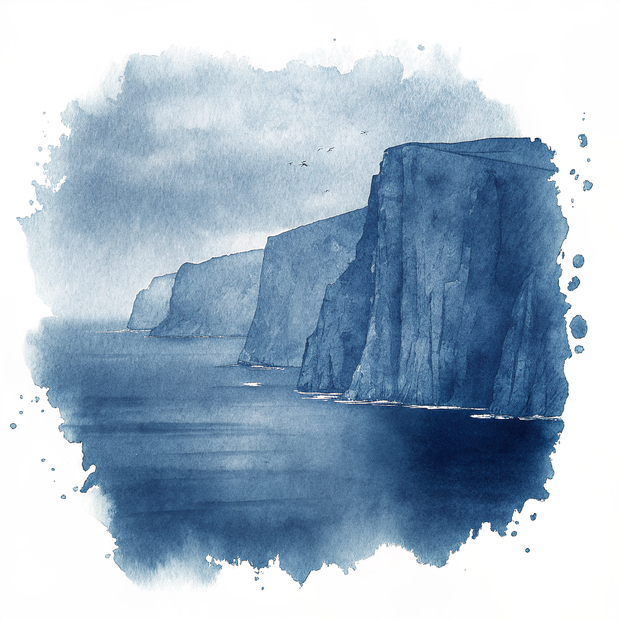
To help you build your own global archive, we've prepared this collection of watercolor studies from our research into Faroe Islands, Denmark. These artifacts are designed to bring the stillness of this corner of the world into your home.

Original Series Decorative Magnet

A personal study of Faroe Islands, Denmark, captured in high-fidelity watercolor and prepared for your collection.

Faroe Islands, Denmark | Coastal Cliffs and Waterfall | Original Series Decorative Magnet
Add to Collection / $18
Exclusive Series Artifact

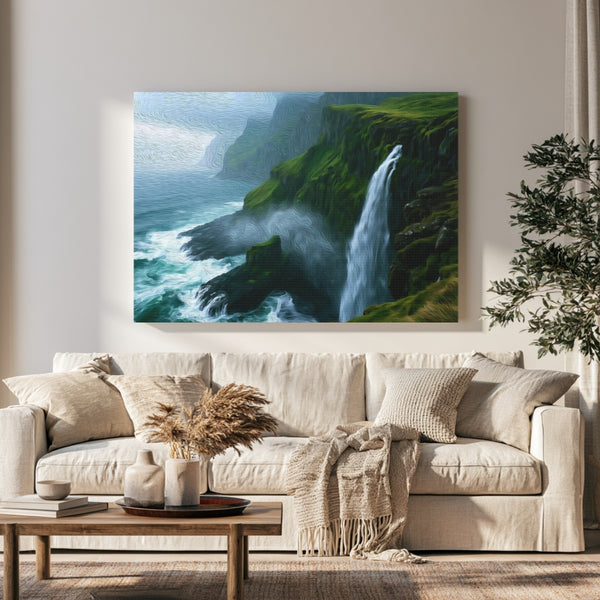
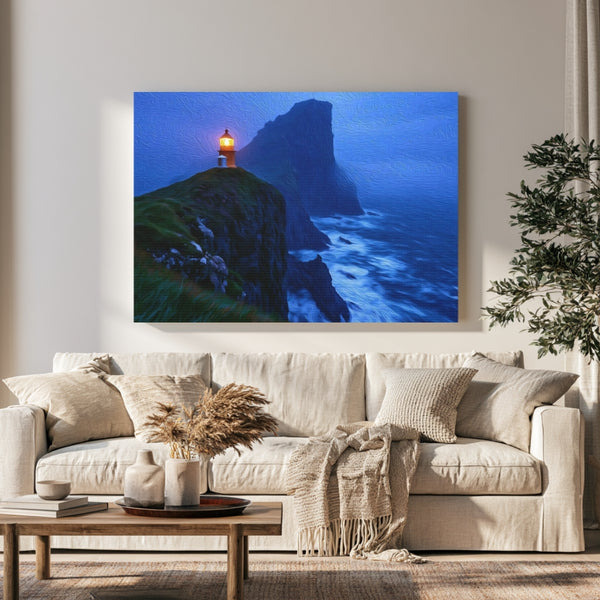
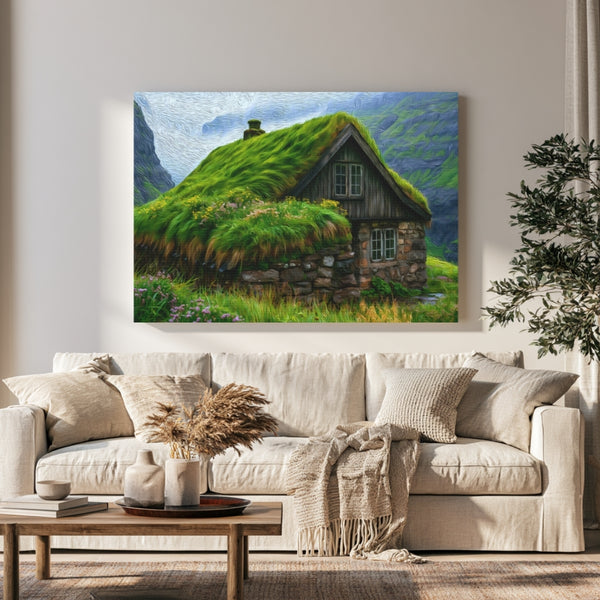
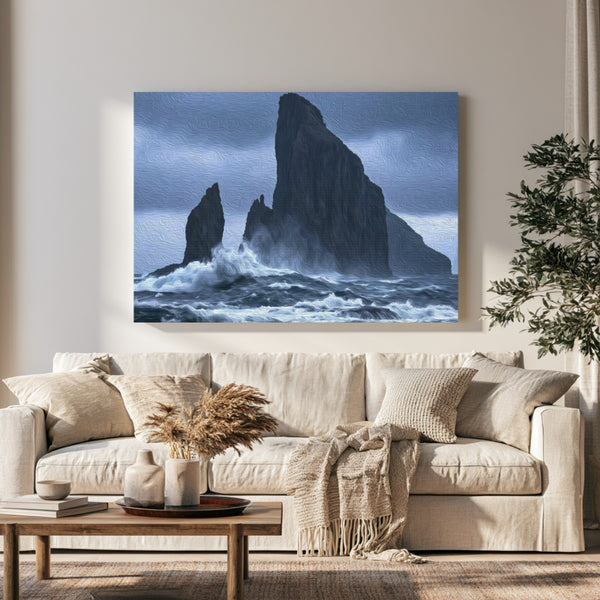
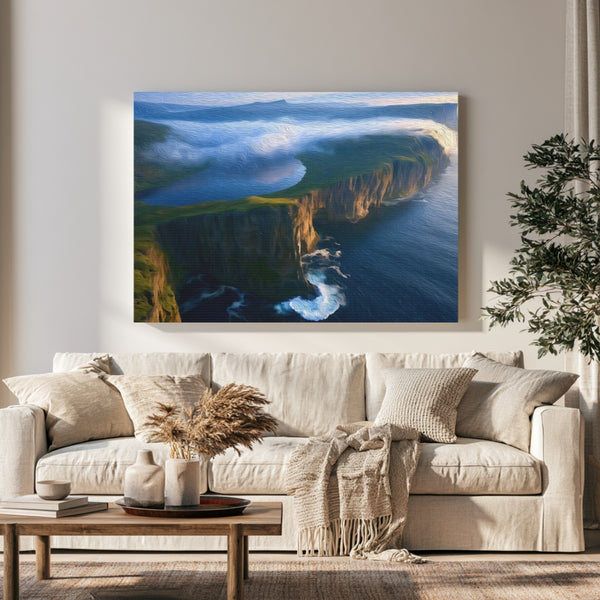
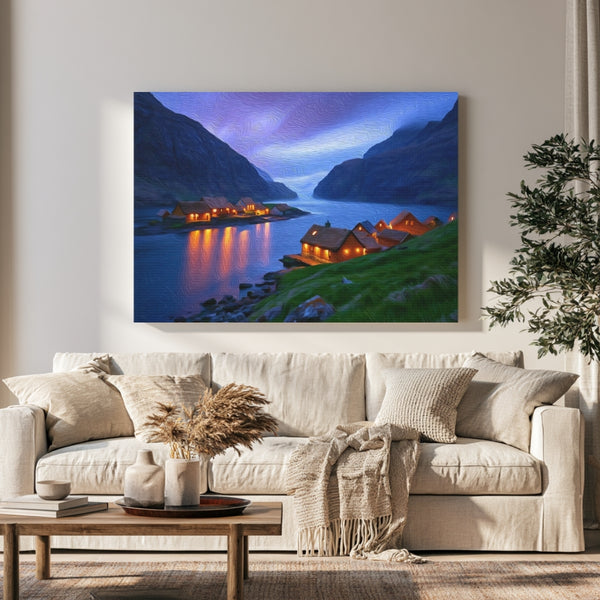
Original Series Gallery Canvas

This high-fidelity canvas is a beautiful way to anchor a room and keep your memories of Faroe Islands, Denmark fresh long after you've returned home.

Faroe Islands, Denmark | Coastal Cliffs and Waterfall | Original Series Gallery Canvas detail Faroe Islands, Denmark | Coastal Cliffs and Waterfall | Original Series Gallery Canvas detail Faroe Islands, Denmark | Coastal Cliffs and Waterfall | Original Series Gallery Canvas detail Faroe Islands, Denmark | Coastal Cliffs and Waterfall | Original Series Gallery Canvas detail
Add to Collection / $65

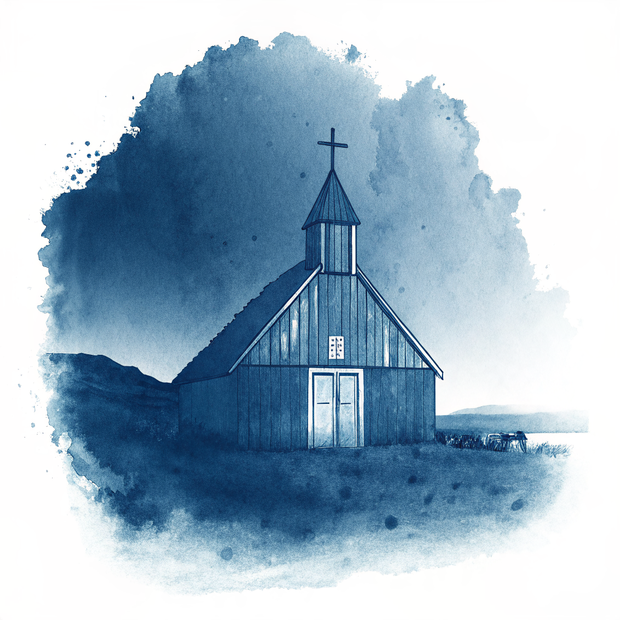
Original Series Hardboard Coaster

A personal study of Faroe Islands, Denmark, captured in high-fidelity watercolor and prepared for your collection.

Faroe Islands, Denmark | Coastal Cliffs and Waterfall | Original Series Hardboard Coaster
Add to Collection / $18
Exclusive Series Artifact

The Spirit of the Land

Archival Note: A curated field study of Faroe Islands, Denmark, prioritizing the specific atmospheric stillness of the region. These artifacts have been meticulously sourced from our global archival partners to represent the area's unique cultural frequency and environmental character. This selection serves as a formal observation for our ongoing global archive, vetted for its visual accuracy and archival merit.

Faroe Islands, Denmark study No. 01
Faroe Islands, Denmark / 01 VIA / Gije Cho
Crepuscular rays break through heavy clouds, illuminating the steep green flanks of the valley in patches of warm gold against the cool grey of the fjord below. A narrow road switchbacks down toward the water's edge, cutting through moss and stone in the unhurried way of roads built for survival rather than speed. The scene carries the particular tension of northern Atlantic weather — brooding and luminous at once, as if the islands themselves are deciding what kind of day it will be.
Faroe Islands, Denmark study No. 02
Faroe Islands, Denmark / 02 VIA / Raul Ling
A traveler standing here would feel the cool, damp weight of Atlantic air pressing in from all sides, the fog swallowing the hilltops and softening every edge into something almost dreamlike. The muted light diffuses evenly across the terraced cliffs, stripping away harsh shadows and lending the landscape an ancient, timeless quality. There is a profound stillness to the scene, broken only by the faint hiss of waves against dark rock far below.
Faroe Islands, Denmark study No. 03
Faroe Islands, Denmark / 03 VIA / Raul Ling
The village sits quietly at the edge of a steel-grey fjord, its modest buildings clustered like an afterthought against the vast Nordic landscape. Most viewers are drawn to the dramatic cliffs and brooding clouds, yet the small stream threading through the foreground carries an unassuming intimacy — its rocky banks edged with frost-browned grass that speaks of a season turning. The turf roof of the tiny church, barely visible amid the white timber structures, anchors the scene in centuries of Faroese tradition.

Where to wander

Archival Note: A curated field study of Faroe Islands, Denmark, prioritizing cultural relevance and archival merit. While we haven't touched down here yet, we've meticulously vetted these locations through our global network of contributors to ensure they represent the most authentic atmosphere for your own expedition.

Local Cuisine Spotlight
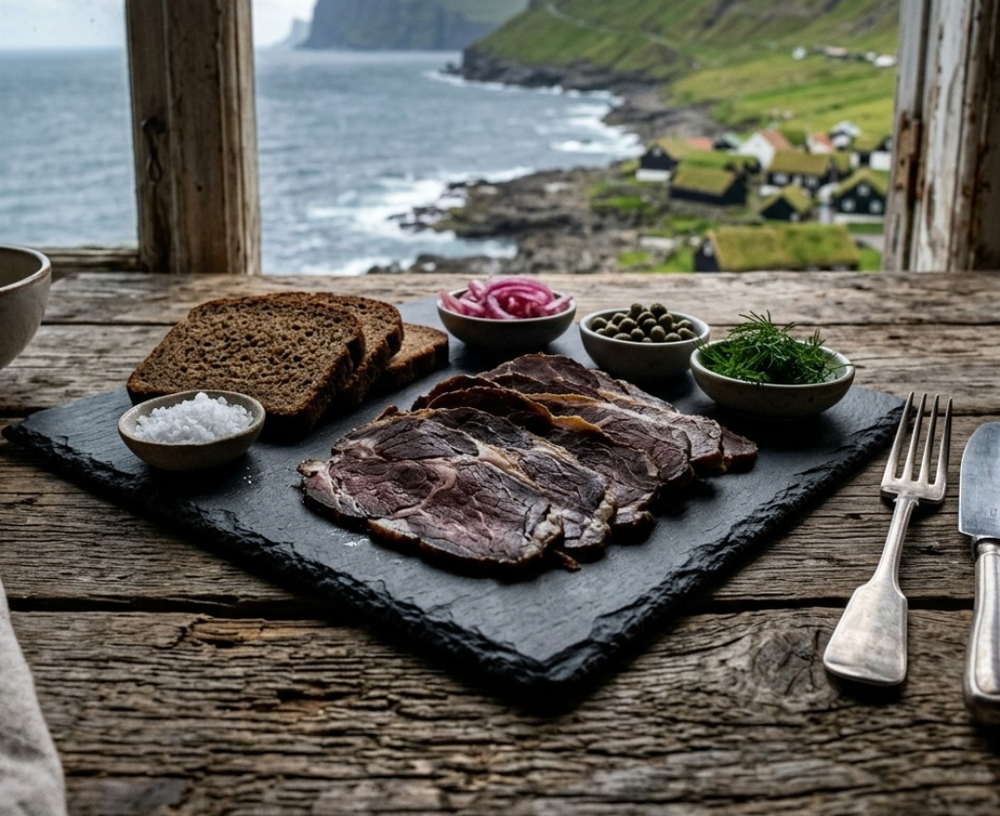
Skerpikjøt, the Faroe Islands wind-dried lamb, delivers a bold, funky depth earned through months of curing in the salt-laden Atlantic breeze. Served paper-thin on dark slate with rye bread and briny capers, each bite carries the wild spirit of the islands themselves.
Credits: THE PAINTED PASSPORT
Local cuisine study in Faroe Islands, Denmark

☕︎ Local Flavor

KOKS

Rating: 5* | Price: $$$$ | Coordinates: 61.8833° N, 6.7500° W

Legendary in every sense, KOKS holds two Michelin stars and serves a deeply personal tasting menu rooted entirely in Faroese nature and tradition. Fermented lamb, hand-dived scallops, and foraged coastal herbs appear in dishes of extraordinary creativity and precision. Dining here is less a meal and more a profound, moving encounter with the soul of these islands.

View Entry Details

Restaurant Ræst

Rating: 4* | Price: $$$ | Coordinates: 62.0078° N, 6.7714° W

Celebrating the ancient Faroese preservation technique of wind-drying and fermenting, Ræst introduces guests to flavors that are boldly unlike anything tasted elsewhere. The fermented lamb and skerpikjøt charcuterie board is a revelation of deep, complex, nutty richness. The knowledgeable staff guide you warmly through every dish, turning curiosity into genuine appreciation.

View Entry Details

Barbara Fish House

Rating: 4* | Price: $$$ | Coordinates: 62.0089° N, 6.7722° W

Set inside a beautifully restored historic warehouse on Tórshavn's old harbor, Barbara is the definitive address for outstanding Faroese seafood. Locally caught cod, langoustine, and Atlantic salmon arrive at the table impossibly fresh and cooked with confident simplicity. The atmospheric interior, candlelit and timber-beamed, makes every dinner feel like a special occasion worth savoring slowly.

View Entry Details

Áarstova Restaurant

Rating: 4* | Price: $$ | Coordinates: 62.0071° N, 6.7708° W

One of Tórshavn's most cherished dining rooms, Áarstova serves honest, beautifully prepared Faroese home cooking in a warmly lit historic setting. Slow-cooked lamb, root vegetables, and thick fish soups reflect generations of island culinary tradition with every comforting spoonful. The friendly, unpretentious atmosphere makes it ideal for long, lingering lunches when rain sweeps in off the North Atlantic.

View Entry Details

🛌︎ Boutique Stays

Hotel Føroyar

Rating: 5* | Price: $$$ | Coordinates: 62.0112° N, 6.7714° W

Perched dramatically on a hillside overlooking Tórshavn, this iconic turf-roofed hotel feels like it grew naturally from the landscape itself. Every room offers sweeping fjord views that shift beautifully with the moody Atlantic light. The warm Faroese hospitality and locally inspired design make it an unforgettable base for exploring the islands.

View Entry Details

Áarstova Guesthouse

Rating: 4* | Price: $$ | Coordinates: 61.5433° N, 6.7712° W

Tucked into a charming historic street in Tórshavn's old town, this intimate guesthouse wraps guests in a cozy, home-like atmosphere. Traditional wooden interiors and hand-knitted textiles create a genuinely Faroese sense of warmth and character. Waking up here and stepping straight into the colorful old quarter feels like a true local experience.

View Entry Details

Gjáargarður Guesthouse

Rating: 4* | Price: $$ | Coordinates: 62.2158° N, 7.0467° W

Nestled in the quiet village of Gjógv, this beloved guesthouse sits beside one of the Faroes' most photographed natural gorges. Simple, clean rooms and hearty homemade breakfasts fuel brilliant coastal hikes right from the doorstep. The surrounding silence, broken only by wind and seabirds, is something you will carry home in your heart.

View Entry Details

Dúvugarðar Farm Stay

Rating: 4* | Price: $ | Coordinates: 61.8667° N, 6.6833° W

This working farm on the island of Streymoy offers an authentic glimpse into traditional Faroese rural life that few visitors ever find. Guests sleep in lovingly restored historic farmhouses surrounded by roaming sheep and dramatic green hillsides. The genuine warmth of the farming family and their home-cooked meals make this stay genuinely unforgettable.

View Entry Details

📍︎ Field Study

Mulafossur Waterfall, Gásadalur

Rating: 5* | Price: Free | Coordinates: 62.0989° N, 7.3739° W

Perhaps the most photographed scene in the entire Faroe Islands, Mulafossur plunges spectacularly off a cliff edge directly into the roaring ocean below. The tiny village of Gásadalur perches behind it like a painting, ringed by emerald mountains and infinite grey Atlantic sky. Visit at golden hour and the combination of mist, light, and raw natural power will stop your breath completely.

View Entry Details

Sørvágsvatn Lake Optical Illusion

Rating: 5* | Price: Free | Coordinates: 62.0725° N, 7.2853° W

This remarkable lake appears to float impossibly high above the ocean when viewed from a specific clifftop vantage point, creating one of nature's finest natural optical illusions. The hike to reach the viewpoint crosses wild, wind-swept moorland that feels thrillingly remote and genuinely alive. The moment the perspective snaps into place and the lake seems to hover over the sea is pure, childlike wonder.

View Entry Details

Kirkjubøur Historic Farm Village

Rating: 5* | Price: Free | Coordinates: 61.9461° N, 6.7706° W

Considered the cultural heartland of the Faroe Islands, Kirkjubøur is home to the ruins of the medieval St. Magnus Cathedral and one of the oldest inhabited wooden farmhouses in the world. The Patursson family has lived in that same farmhouse for over 900 years and sometimes welcomes curious visitors inside. Standing among these ancient stones beside the quiet sea shore, the weight of island history settles over you beautifully.

View Entry Details

Vestmanna Bird Cliffs Boat Tour

Rating: 5* | Price: $$ | Coordinates: 62.1564° N, 7.1681° W

Small open boats navigate deep into spectacular sea caves and beneath towering basalt cliff faces draped in nesting seabirds including thousands of puffins, guillemots, and gannets. The scale of the cliffs rising hundreds of metres directly from the churning sea is genuinely humbling and impossible to capture fully in a photograph. Skippers know every cave and current intimately, bringing you thrillingly close to one of the North Atlantic's great natural spectacles.

View Entry Details

Typography

Archival Note: A formal technical study of Faroe Islands, Denmark—archiving the coordinates, elevation, and environmental data that define the region. This data serves as a vital record for our ongoing global field study, allowing us to reconstruct the regional atmosphere with archival precision before our physical arrival.

Botanical and pigment specimen study for Faroe Islands, Denmark Colors of Faroe Islands, Denmark
Coordinates
62.0000° N, 6.7833° W — Central Faroe Islands, North Atlantic Ocean
Historical Epoch
Norse settlers arrived in the ninth century, displacing earlier Irish hermit monks. The islands passed to Denmark in 1814 and remain a self-governing territory today, fiercely proud of a culture and language that survived centuries of outside rule.
Elevation
0-882 m / 0-2,894 ft - Sea level harbors rising to the peak of Slaettaratindur, the highest point in the archipelago
Atmosphere
Cfc - Subpolar oceanic. Cool, wet, and deeply changeable year-round. Four seasons can visit in a single afternoon, and the wind is a constant, sculptural presence.
Observation Hour
21:30 - In summer the Faroes hold a near-arctic twilight for hours after sunset. The sky softens to layered apricot and violet above the cliffs, and the fjord surfaces go completely still and mirror-flat.
Primary Pigment
Atlantic Slate (#4A5568) and Heather Mist (#B0A8B9)
Best Time to Visit
June through August - longest daylight hours, mildest temperatures, and the cliffs and hillsides at their most vivid green.
Avoid Visiting
December through January - near-constant storms, very short daylight, and many attractions and boat tours closed for the season.

The Local Tongue

Language is the invisible architecture of Faroe Islands, Denmark. These entries document the regional vocabulary—capturing the "texture" of local speech that standard translations often miss. Hand-curated expressions reflecting the specific spirit and daily rhythm of the region.
Archival study of Faroese cultural texture

via / Esra Erdoğdu

Primary Language Faroese
Regional Dialect Faroese (Foroysk) - a North Germanic language descended from Old Norse, spoken by roughly 75,000 people worldwide and distinct from both Danish and Icelandic in sound and structure.

Faereyjar

Faereyjar means 'Islands of Sheep,' the Old Norse name that gave the archipelago its identity and remains embedded in its coat of arms. The sheep outnumber people nearly two to one here, and the sight of them grazing on near-vertical clifftops, indifferent to the Atlantic below, is one of the defining images of the islands.

Oyggjar

Oyggjar simply means 'islands' in Faroese, but the word carries a weight of collective belonging that a plain translation cannot hold. Faroese people speak of 'the oyggjar' the way others might speak of home itself, a sense that the land is not just geography but an extension of who they are.

Heimili

Heimili translates as 'home' or 'homestead' and points to a deeply rooted Faroese culture of place-attachment, where families have farmed and fished the same land for generations. Walking into a traditional heimili, the smell of dried lamb and woodsmoke makes the centuries feel surprisingly thin.

Wait! before you go...

Before you head over to Faroe Islands, Denmark, we’ve audited the essential data points for this corner of the world. These notes cover the logistics—from currency ratios to transit hubs—to help you navigate the landscape with clarity.
🚲 Getting Around Getting around the islands relies on a surprisingly well-connected network of tunnels, including a remarkable subsea roundabout, along with buses and ferries. Renting a car is strongly recommended for reaching the more dramatic and remote viewpoints on the western islands.
⚖️ Cash or Card Card payments are accepted almost everywhere in the Faroes, from restaurants in Torshavn to small guesthouses in remote villages. Carrying a small amount of Danish Krone is wise for the occasional ferry ticket machine or local market stall that prefers cash.
☁️ Good to Know Faroese people are warm but quietly private, and loud or performative behaviour in small villages is noticed and gently frowned upon. Asking permission before photographing private farm buildings or rooftops is considered basic courtesy and is almost always rewarded with a story.
🏧 ATMs ATMs are available in Torshavn and in the larger village centers, and most are linked to international networks including Visa and Mastercard. Outside the capital, ATM access becomes sparse quickly, so withdrawing enough cash before heading into the western or northern islands is a sensible precaution.
💳 Currency The Danish Krone (DKK) is the official currency of the Faroe Islands, though the islands also print their own Faroese Krone notes which are equivalent in value. Faroese notes are technically not legal tender in mainland Denmark, so spending them before leaving is a good habit.
🔌 Plugs Type K outlets are standard in the Faroe Islands, the same two-round-pin-plus-grounding-pin system used in Denmark. Most European two-pin plugs fit without an adapter.
🛡️ Safety The Faroes are exceptionally safe for travelers, with very low crime and a strong culture of communal trust. The real risks are environmental: cliff edges are often unfenced, paths get slippery fast in rain, and fog can descend in minutes, so solid footwear and a downloaded offline map are non-negotiable.
✈️ Airports Vagar Airport (FAE) is the only airport in the Faroe Islands, located on the island of Vagar and connected to Torshavn by a mix of bus and the remarkable subsea Vagar Tunnel. Atlantic Airways operates direct routes from Copenhagen, and seasonal connections run from several other European cities including Edinburgh and London.

Behind The Scenes

Nathan

Note from the Founder

Hey, did you know this fun fact about Faroe Islands, Denmark? The Faroe Islands have more tunnels per capita than almost anywhere on earth, including a unique undersea roundabout tunnel connecting three islands beneath the fjord floor - a piece of infrastructure that doubles as a minor marvel.
Thank you for exploring the Faroe Islands, Denmark series with us. We hope these notes have inspired you to add this incredible destination to your own passport—we are so glad you're here. — Nathan

Some of our Favorites