

The Real Crater Lake
More than a shop, each page is an immersive guide to the real Crater Lake: local tips and tricks, the language you'll hear, where to eat, stay, and explore, the lay of the land, and a fun fact to carry home — every canvas mapped to the very spot it was captured.
Crater Lake, Oregon, United States | 'The Blue That Has No Name'
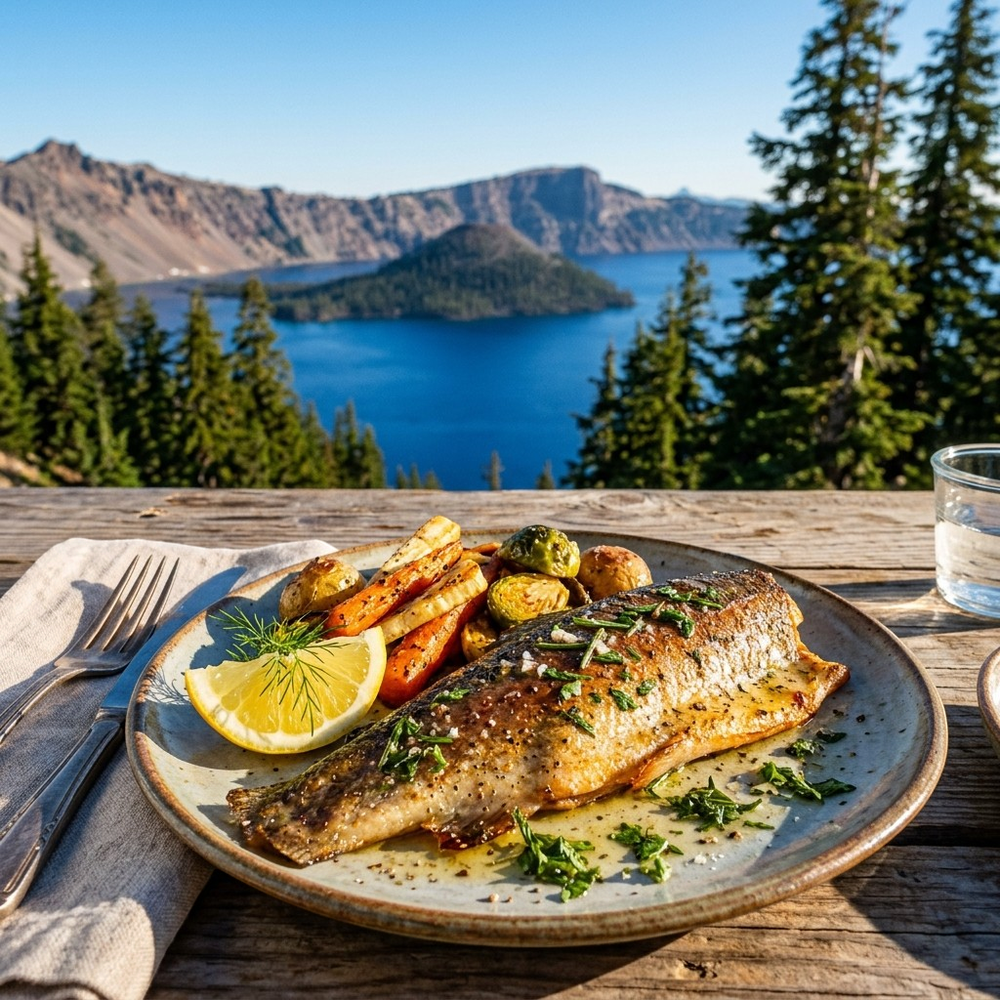
Crater Lake sits inside the collapsed caldera of ancient Mount Mazama, a volcano that erupted so violently roughly 7,700 years ago that it essentially swallowed itself whole. What remained was a bowl of breathtaking stillness that slowly filled with snowmelt and rain over centuries, producing water so pure and so impossibly deep that its blue defies easy description. The Klamath peoples have held this place sacred for thousands of years, calling it Giiwas, and their reverence is easy to understand the moment you first see the lake shimmer from the rim at dawn. At 1,943 feet, it is the deepest lake in the United States, and that depth is exactly what makes its color so extraordinary.
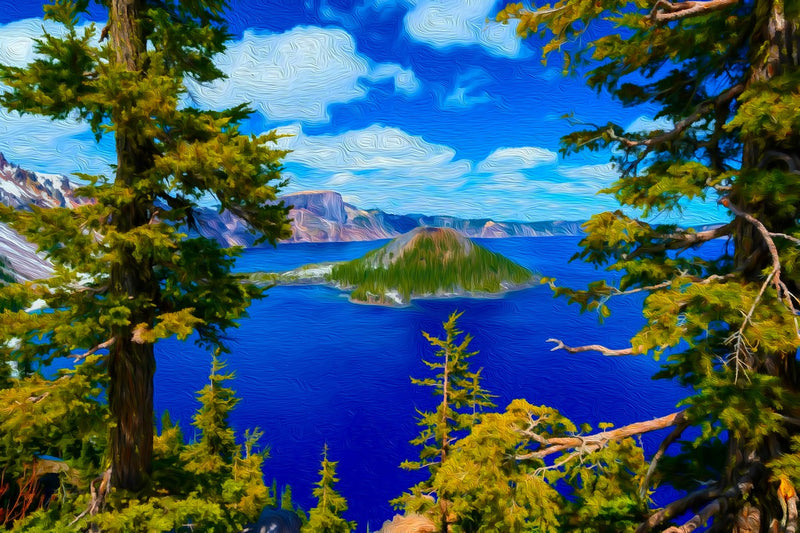
The watercolor palette here is anchored by that famous cobalt, somewhere between ultramarine and Prussian blue, so saturated it reads almost unreal against a canvas. The surrounding rim softens it beautifully with dusty pumice greys, warm pine greens, and the pale ochre of volcanic rock bleached by altitude and sun. In winter, a heavy mantle of snow adds raw titanium white to the composition, while summer sunsets streak the water with tangerine and rose that glow briefly before fading back into that deep, consuming blue.
We hope you love getting lost in Crater Lake through the art above — and that one of these canvases finds a home on your wall. Happy travels, from all of us at The Painted Passport.