Shop the Collection

To help you build your own global archive, we've prepared this collection of watercolor studies from our research into Chan Chan, Peru. These artifacts are designed to bring the stillness of this corner of the world into your home.

Original Series Decorative Magnet

A personal study of Chan Chan, Peru, captured in high-fidelity watercolor and prepared for your collection.

Chan Chan, Peru | Ancient Adobe City Ruins | Original Series Decorative Magnet
Add to Collection / $18
Exclusive Series Artifact

Original Series Gallery Canvas

This high-fidelity canvas is a beautiful way to anchor a room and keep your memories of Chan Chan, Peru fresh long after you've returned home.

Chan Chan, Peru | Ancient Adobe City Ruins | Original Series Gallery Canvas detail Chan Chan, Peru | Ancient Adobe City Ruins | Original Series Gallery Canvas detail Chan Chan, Peru | Ancient Adobe City Ruins | Original Series Gallery Canvas detail Chan Chan, Peru | Ancient Adobe City Ruins | Original Series Gallery Canvas detail
Add to Collection / $65

Original Series Hardboard Coaster

A personal study of Chan Chan, Peru, captured in high-fidelity watercolor and prepared for your collection.

Chan Chan, Peru | Ancient Adobe City Ruins | Original Series Hardboard Coaster
Add to Collection / $18
Exclusive Series Artifact

The Spirit of the Land

Archival Note: A curated field study of Chan Chan, Peru, prioritizing the specific atmospheric stillness of the region. These artifacts have been meticulously sourced from our global archival partners to represent the area's unique cultural frequency and environmental character. This selection serves as a formal observation for our ongoing global archive, vetted for its visual accuracy and archival merit.

Chan Chan, Peru study No. 01
Chan Chan, Peru / 01 VIA / Gilmer Diaz Estela
Sunlight filters through the overcast sky, casting a soft, even glow across the weathered adobe walls of this centuries-old ceremonial space. The pale tan and cream tones of the deteriorating plaster create a haunting sense of time's passage, while the geometric precision of the dome's ventilation holes hints at sophisticated pre-Columbian engineering. Sand covers the floor where thousands once gathered, making the silence feel almost reverential.
Chan Chan, Peru study No. 02
Chan Chan, Peru / 02 VIA / Boris Hamer
The harsh midday sun casts sharp shadows across the earthen compound, illuminating the intricate brickwork of the pre-Columbian fortress. The arid landscape and pale sky create an austere, timeless atmosphere that emphasizes the scale and durability of this ancient citadel. Standing in this excavated courtyard, one would feel the weight of history amid the silence and heat of the Peruvian desert.
Chan Chan, Peru study No. 03
Chan Chan, Peru / 03 VIA / Mahmoud Yahyaoui
This photograph captures a remarkably preserved section of Chan Chan, the largest pre-Columbian city in South America. The distinctive white lime mortar that frames each arched entrance and window opening provides striking contrast against the earthen adobe walls, creating a rhythmic pattern across the facade. An often-overlooked detail is the sparse desert vegetation sprouting at ground level, a subtle reminder of how this monumental city was gradually reclaimed by the arid landscape surrounding it.

Where to wander

Archival Note: A curated field study of Chan Chan, Peru, prioritizing cultural relevance and archival merit. These locations have been meticulously researched and vetted to ensure they represent the most authentic atmosphere for your own expedition.

Local Cuisine Spotlight
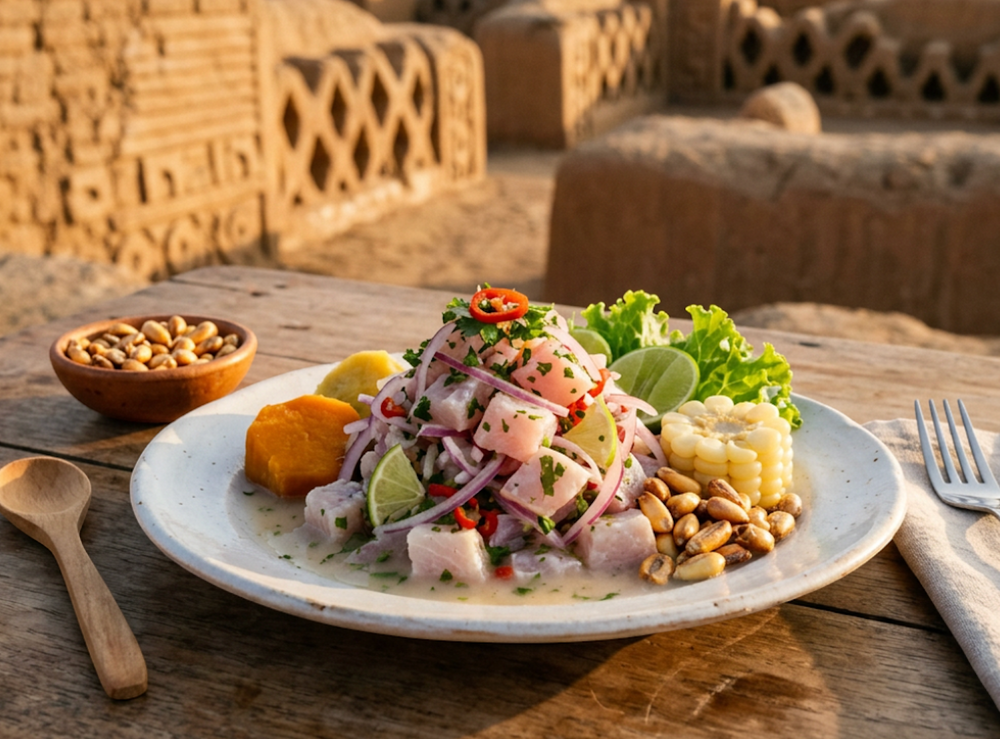
This authentic ceviche showcases the marriage of coastal tradition and Peruvian terroir, with tender fish brightened by lime's embrace and complemented by toasted peanuts and sweet potato. The plate sings with layers of texture and temperature contrast, each component telling the story of Peru's culinary heritage in this historic setting.
Credits: THE PAINTED PASSPORT
Local cuisine study in Chan Chan, Peru

☕︎ Local Flavor

El Mochica Restaurante

Rating: 5* | Price: $$ | Coordinates: -8.1091, -79.0298

El Mochica is a beloved Trujillo institution celebrated for its authentic northern Peruvian cuisine, including rich shambar stew and perfectly seasoned ceviche. The dining room is bright and inviting, adorned with colorful murals depicting Chimu and Moche cultural scenes. Every dish is made with locally sourced ingredients that reflect the deep culinary traditions of the La Libertad region.

View Entry Details

Cevicheria El Rey

Rating: 4* | Price: $$ | Coordinates: -8.0987, -79.0445

Perched near the Huanchaco waterfront, this lively cevicheria serves some of the freshest fish caught daily by local reed-boat fishermen. The tangy leche de tigre here is legendary among regulars and perfectly balanced with aji amarillo and fresh lime. Outdoor seating lets you enjoy the ocean breeze while savoring every bite of their generous seafood platters.

View Entry Details

La Lomita Restaurante Huanchaco

Rating: 4* | Price: $$ | Coordinates: -8.0953, -79.1221

La Lomita is a hidden gem perched on the hillside of Huanchaco village with sweeping views of the Pacific and the distant Chan Chan plain. Their specialty is a slow-roasted duck with cilantro rice that regulars travel long distances to enjoy. The atmosphere is relaxed and family oriented, with staff who treat every visitor like a longtime neighbor.

View Entry Details

Mercado Central de Trujillo Food Stalls

Rating: 4* | Price: $ | Coordinates: -8.1115, -79.0273

For an immersive and affordable taste of local life, the food stalls inside Trujillo's central market are absolutely unmissable. Vendors serve steaming bowls of sopa teologa, freshly fried picarones, and sweet chicha morada poured generously into tall glasses. Eating here alongside local families and market workers offers a cultural experience just as memorable as any archaeological site.

View Entry Details

🛌︎ Boutique Stays

Hotel El Brujo Trujillo

Rating: 4* | Price: $$ | Coordinates: -8.1116, -79.0288

This welcoming hotel sits just a short drive from the ancient Chan Chan citadel, making it a perfect base for history lovers. Rooms are spacious and decorated with warm earthy tones inspired by Chimu culture. The on-site staff happily arranges guided tours and shares genuine local knowledge about the region.

View Entry Details

Casa Andina Select Trujillo

Rating: 4* | Price: $$$ | Coordinates: -8.1120, -79.0287

Casa Andina offers reliable comfort and polished service in the heart of Trujillo, close to Chan Chan and the coast. The rooftop terrace provides lovely views over the city and is ideal for unwinding after a full day exploring adobe ruins. Breakfast is generous and includes fresh Peruvian fruits, pastries, and local coffee.

View Entry Details

Pullman Trujillo Resort

Rating: 5* | Price: $$$$ | Coordinates: -8.1098, -79.0351

This upscale resort blends contemporary design with coastal Peruvian charm, offering stunning Pacific Ocean views from nearly every room. The large outdoor pool area is surrounded by tropical greenery, creating a relaxing retreat after visiting the nearby ruins. Guests consistently praise the attentive service and the beautifully curated seafood dining experience.

View Entry Details

Hostal Colonial Chan Chan

Rating: 3* | Price: $ | Coordinates: -8.1074, -79.0612

This charming budget hostel is located just minutes from the main entrance of Chan Chan, offering unbeatable convenience for early morning visits. Rooms are simple, clean, and decorated with handmade crafts sourced from nearby artisan markets. The friendly owners brew fresh herbal tea each morning and love sharing stories about local Chimu history.

View Entry Details

📍︎ Field Study

Chan Chan Archaeological Zone

Rating: 5* | Price: $ | Coordinates: -8.1028, -79.0722

Chan Chan is the largest pre-Columbian city in South America and the most impressive achievement of the Chimu civilization, covering nearly 20 square kilometers. The intricately carved adobe walls of the Tschudi Palace are extraordinarily well preserved, depicting sea creatures, birds, and geometric patterns in stunning relief. Walking through these ancient corridors feels genuinely humbling, connecting you directly to a sophisticated culture that thrived over 1000 years ago.

View Entry Details

Huaca de la Luna

Rating: 5* | Price: $ | Coordinates: -8.1579, -78.9987

This magnificent Moche ceremonial pyramid sits just outside Trujillo and features some of the most vivid and colorful ancient murals discovered anywhere in the Americas. Guided tours take you through multiple construction phases, revealing how the pyramid was rebuilt and expanded over several centuries by successive rulers. The adjacent Huaca del Sol looms dramatically nearby, making the entire site feel like a true window into a lost world.

View Entry Details

Huanchaco Beach and Totora Reed Boats

Rating: 4* | Price: Free | Coordinates: -8.0820, -79.1204

Huanchaco is a tranquil fishing village where local fishermen still ride caballitos de totora, ancient reed boats unchanged in design for thousands of years. Watching skilled fishermen paddle through the surf at sunrise is one of the most visually striking and culturally meaningful experiences near Chan Chan. The village also offers excellent surfing spots, colorful beachfront cafes, and easy access to traditional craft vendors along the shore.

View Entry Details

Museo de Sitio Chan Chan

Rating: 4* | Price: $ | Coordinates: -8.1052, -79.0686

Located at the entrance to the archaeological complex, this thoughtfully designed site museum provides essential context for understanding the Chimu civilization before you explore the ruins. Well-curated exhibits display ceramics, textiles, and ritual objects excavated from the site, with clear bilingual explanations in both Spanish and English. Visiting the museum first genuinely deepens your appreciation of the intricate carvings and spatial layout you encounter throughout the citadel.

View Entry Details

Typography

Archival Note: A formal technical study of Chan Chan, Peru, archiving the coordinates, elevation, and environmental data that define the region. This data serves as a vital record for our ongoing global field study, providing the technical foundation behind every atmospheric detail captured in our visual work.

Botanical and pigment specimen study for Chan Chan, Peru Colors of Chan Chan, Peru
Coordinates
8.1028° S, 79.0722° W — Chan Chan Archaeological Zone, Trujillo Region, northern coastal Peru
Historical Epoch
Chan Chan served as the capital of the Chimu Empire from roughly 900 to 1470 AD, when it fell to the expanding Inca. At its height it housed an estimated 30,000 people across nine royal citadels, each built for a different Chimu king.
Elevation
0-30 m / 0-98 ft, flat coastal desert plain at sea level along the Pacific coast
Atmosphere
BWh, Hot Desert. Chan Chan sits in one of the driest places on Earth, with almost no rain year-round and a cooling coastal fog called garua keeping temperatures mild rather than scorching.
Observation Hour
07:00. Soft diffused morning light filters through coastal haze, casting long gentle shadows across the adobe friezes and warming the ochre walls before the midday glare flattens the texture.
Primary Pigment
Desert Adobe Ochre (#C4935A) and Coastal Haze Blue (#A8BDC8)
Best Time to Visit
May through September. The coastal garua fog keeps temperatures comfortable and crowds are lighter, making it the most pleasant season for exploring the open-air ruins.
Avoid Visiting
January through March. Summer brings occasional El Nino-related rainfall that can damage the fragile adobe structures and make site conditions muddy and unpredictable.

The Local Tongue

Language is the invisible architecture of Chan Chan, Peru. These entries document the regional vocabulary—capturing the "texture" of local speech that standard translations often miss. Hand-curated expressions reflecting the specific spirit and daily rhythm of the region.
Archival study of Spanish cultural texture

via / DANIEL COEN

Primary Language Spanish
Regional Dialect Peruvian Spanish, with remnants of Quingnam and Mochica in place names and local cultural vocabulary

Chimor

Chimor refers to the powerful Chimu kingdom that built Chan Chan as its imperial capital around 900 AD. Standing inside the Ciudadela Tschudi, where geometric fish and wave patterns repeat endlessly across the clay walls, the name carries the weight of an entire civilization that controlled the Pacific coast for centuries before the Inca arrived.

Caballito de totora

Caballito de totora translates loosely to 'little horse of reed,' describing the slender bundled-reed watercraft that local fishermen have paddled at Huanchaco Beach for over three thousand years. Watching a fisherman kneel on the curved prow at dawn, pushing out through the surf with a split bamboo paddle, is one of the few living connections to a world the Chimu would still recognize.

Marinera

Marinera is Peru's national dance, a flirtatious and elegant courtship performed with a handkerchief, and Trujillo claims it more fiercely than anywhere else in the country. Each January the city hosts the Festival Nacional de la Marinera, and the sound of Andean strings and coastal rhythm fills plazas just a short drive from the silent adobe ruins that predate the dance by a thousand years.

Wait! before you go...

Before you head over to Chan Chan, Peru, we’ve audited the essential data points for this corner of the world. These notes cover the logistics—from currency ratios to transit hubs—to help you navigate the landscape with clarity.
🚲 Getting Around Most visitors base themselves in Trujillo, about 5 km from Chan Chan, where taxis and combis run regularly to the site. Renting a private taxi for a full day is the most practical way to visit Chan Chan, Huaca de la Luna, and Huanchaco without rushing.
⚖️ Cash or Card Cash is strongly preferred in this region, especially at archaeological sites, local markets, and small restaurants. Cards are accepted at larger hotels and some established restaurants in Trujillo, but carrying Peruvian soles for most daily expenses will prevent frustration at the ruins and food stalls.
☁️ Good to Know Peruvians from the Trujillo region take deep pride in their Chimu and Moche heritage, and engaging with that history respectfully opens doors in conversation. Visiting the sites with a local guide, even informally arranged near the entrance, gives context that no sign or brochure fully captures and supports community livelihoods directly.
🏧 ATMs ATMs are widely available in central Trujillo, particularly near the Plaza de Armas and along Jiron Pizarro, and most accept international Visa and Mastercard. There are no ATMs at the Chan Chan site itself, so withdrawing cash in the city before heading to the ruins is highly recommended.
💳 Currency The official currency is the Peruvian Sol (PEN), abbreviated as S/. Coins come in denominations from 5 centimos up to 5 soles, and bills range from S/10 to S/200, with S/10 and S/20 notes being the most useful for daily transactions at markets and small vendors.
🔌 Plugs Peru uses Type A and Type C outlets at 220V and 60Hz. A universal travel adapter is recommended, particularly for devices that require Type G or Type I plugs.
🛡️ Safety Chan Chan and Trujillo are generally safe for tourists who stay alert and take standard precautions. It is advisable to leave valuables at the hotel, avoid isolated areas of the ruins without a guide or group, and use registered taxis or hotel-arranged transport rather than unmarked vehicles.
✈️ Airports Captain FAP Carlos Martinez de Pinillos International Airport (TRU) in Trujillo serves Chan Chan directly, with flights from Lima taking about 1 hour and 15 minutes. Lima's Jorge Chavez International Airport (LIM) is the main international hub, with connections to North America, Europe, and beyond before a short domestic connection north.

Behind The Scenes

Nathan

Note from the Founder

Hey, did you know this fun fact about Chan Chan, Peru? Chan Chan covers approximately 20 square kilometers, making it the largest pre-Columbian city in South America and one of the largest adobe cities ever built. It was designated a UNESCO World Heritage Site in 1986.
Thank you for exploring the Chan Chan, Peru series with us. We hope these notes have inspired you to add this incredible destination to your own passport—we are so glad you're here. — Nathan

Some of our Favorites