

The Real Bryce Canyon
More than a shop, each page is an immersive guide to the real Bryce Canyon: local tips and tricks, the language you'll hear, where to eat, stay, and explore, the lay of the land, and a fun fact to carry home — every canvas mapped to the very spot it was captured.
Bryce Canyon, United States | 'Where the Earth Forgot to Stop Sculpting'
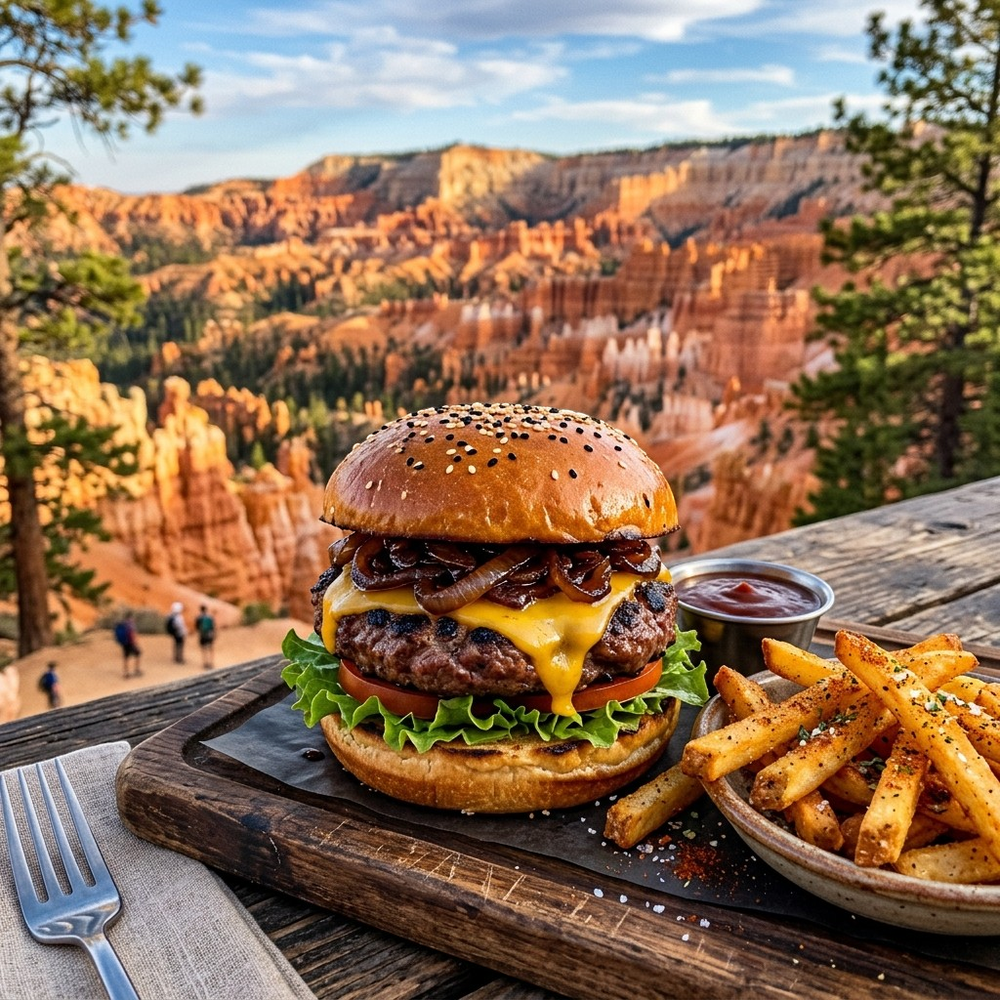
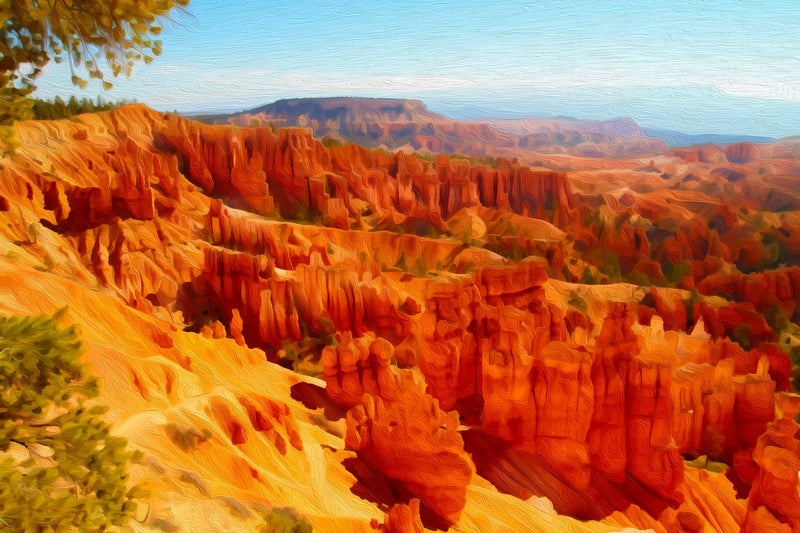
Bryce Canyon is not technically a canyon at all. It is a series of natural amphitheaters carved into the edge of the Paunsaugunt Plateau by millions of years of frost, rain, and relentless patience. The Paiute people who lived here long before park boundaries existed called the hoodoos -- those fluted orange spires rising from the basin floor -- the 'Legend People,' turned to stone. That mythology feels entirely reasonable when you stand at the rim at dawn and watch the first light ignite every column from copper to cream. At an elevation pushing 9,000 feet, the air is genuinely thin and genuinely cold, even in summer, and the silence between gusts of wind carries a quality that very few places on earth can match.
The palette here pulls hard toward warm iron oxide and burnt sienna, the deep ochres and rusted umbers that saturate when the sun is low. Against those warm tones, the sky at Bryce Canyon reaches a blue so saturated it almost reads as indigo at midday -- a cerulean intensity that comes from elevation and the absence of coastal humidity. Watercolor artists working this landscape lean into raw sienna and quinacridone gold for the hoodoos, then push wet cobalt into the shadows where the amphitheater deepens into canyon.
We hope you love getting lost in Bryce Canyon through the art above — and that one of these canvases finds a home on your wall. Happy travels, from all of us at The Painted Passport.