Shop the Collection

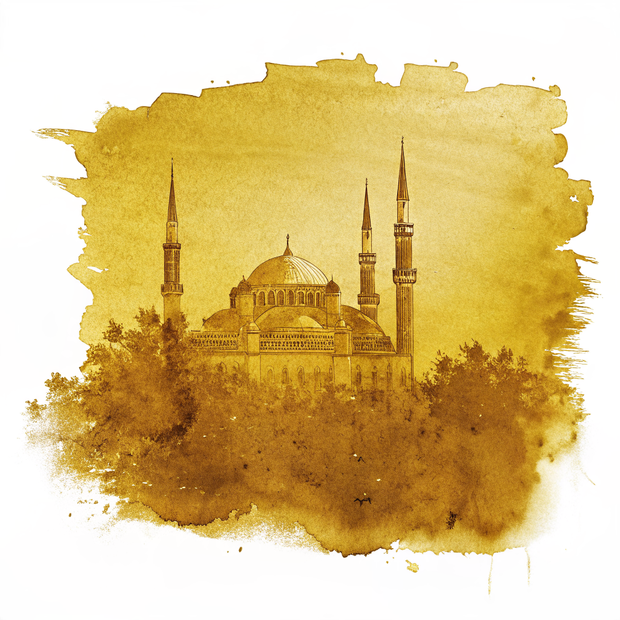
To help you build your own global archive, we've prepared this collection of watercolor studies from our research into Beirut, Lebanon. These artifacts are designed to bring the stillness of this corner of the world into your home.

Original Series Decorative Magnet

A personal study of Beirut, Lebanon, captured in high-fidelity watercolor and prepared for your collection.

Beirut, Lebanon | Original Series Decorative Magnet
Add to Collection / $18
Exclusive Series Artifact

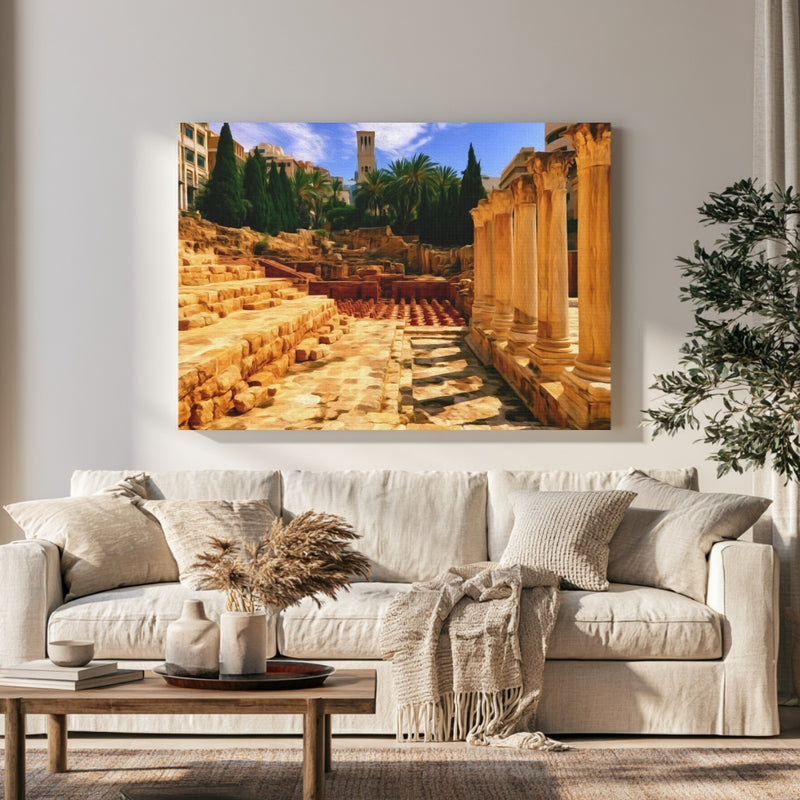
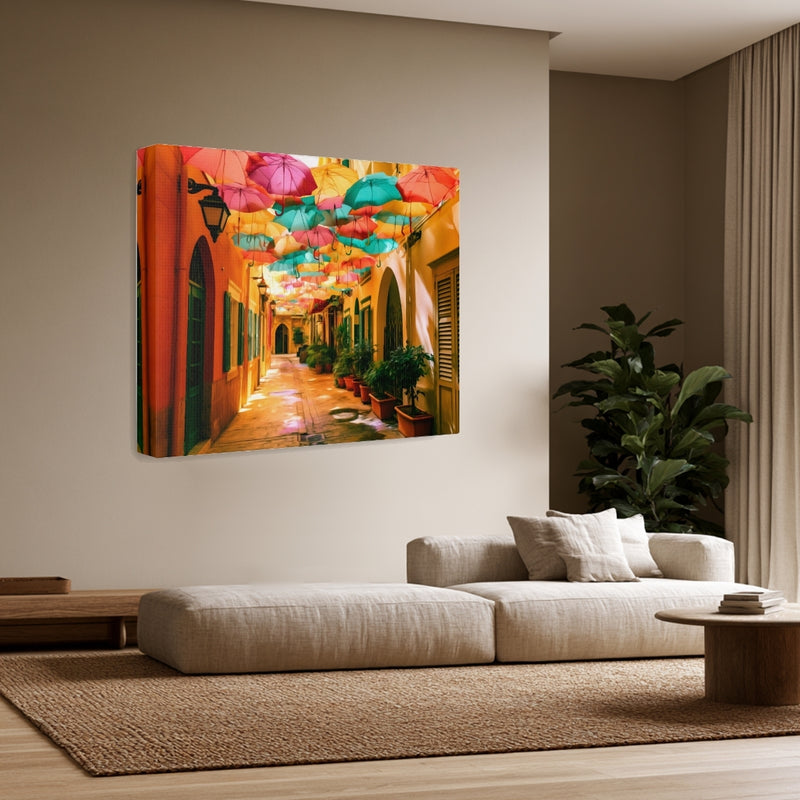
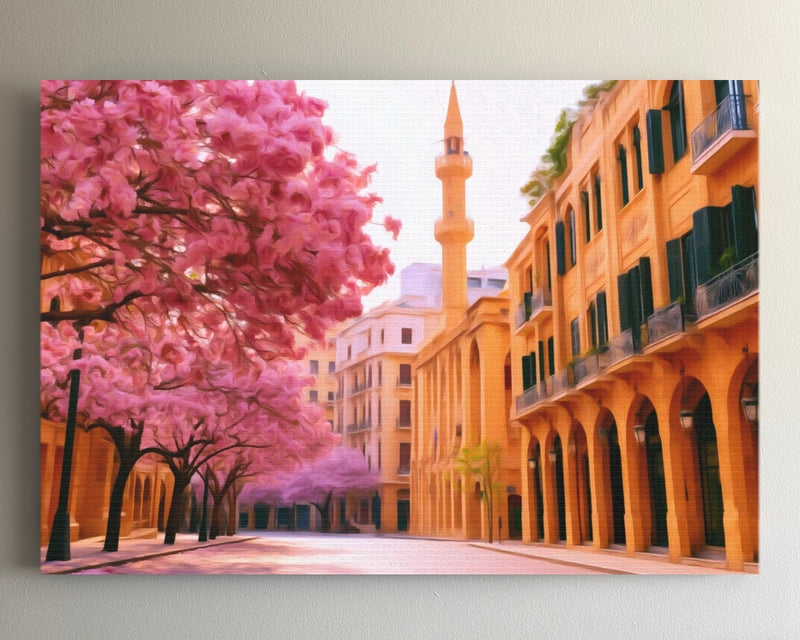
Original Series Gallery Canvas

This high-fidelity canvas is a beautiful way to anchor a room and keep your memories of Beirut, Lebanon fresh long after you've returned home.

Beirut, Lebanon | Original Series Gallery Canvas detail Beirut, Lebanon | Original Series Gallery Canvas detail Beirut, Lebanon | Original Series Gallery Canvas detail Beirut, Lebanon | Original Series Gallery Canvas detail
Add to Collection / $65

Original Series Hardboard Coaster

A personal study of Beirut, Lebanon, captured in high-fidelity watercolor and prepared for your collection.

Beirut, Lebanon | Original Series Hardboard Coaster
Add to Collection / $18
Exclusive Series Artifact

The Spirit of the Land

Archival Note: A curated field study of Beirut, Lebanon, prioritizing the specific atmospheric stillness of the region. These artifacts have been meticulously sourced from our global archival partners to represent the area’s unique cultural frequency and environmental character. This selection serves as a formal observation for our ongoing global archive, vetted for its visual accuracy and archival merit.

Beirut, Lebanon study No. 01
Beirut, Lebanon / 01 VIA / Piotr Chrobot
This breathtaking aerial view captures the vibrant essence of Beirut, where a sprawling cityscape gracefully meets the deep turquoise waters of the Mediterranean. Perched along the rugged, sun-kissed cliffs, the iconic Pigeon Rocks stand as resilient natural monuments, symbolizing the enduring beauty and soulful spirit of Lebanon's capital. It’s a peaceful reminder of how harmoniously urban life and natural wonders can coexist, inspiring awe with every wave that kisses the shore.
Beirut, Lebanon study No. 02
Beirut, Lebanon / 02 VIA / Michal GADEK
Sunlight filters beautifully through a lush canopy of green leaves and palm trees, illuminating a charming stone staircase that winds its way upward. Framed by rustic, sun-warmed stone walls and overflowing ivy, this enchanting alleyway leads the eye toward a quaint teal door nestled at the top. It feels like a peaceful, hidden sanctuary frozen in time, inviting you to slow down, take a deep breath, and explore where the steps might lead.
Beirut, Lebanon study No. 03
Beirut, Lebanon / 03 VIA / Paul Melki
The striking blue domes of the Mohammad Al-Amin Mosque rise majestically against a soft, overcast sky, serving as a powerful symbol of peace and spiritual heritage in the heart of Beirut. Flanked by four towering, intricately carved minarets, the architectural masterpiece glows with a warm, golden hue that radiates a sense of quiet strength and timeless elegance. It stands as a beautiful testament to the city's rich cultural tapestry, inspiring a moment of quiet reflection for all who look upon it.

Where to wander

Archival Note: A curated field study of Beirut, Lebanon, prioritizing cultural relevance and archival merit. While we haven't touched down here yet, we’ve meticulously vetted these locations through our global network of contributors to ensure they represent the most authentic atmosphere for your own expedition.

Local Cuisine Spotlight
A beautifully prepared plate of golden, grilled chicken shish taouk captures the warmth and hospitality of Lebanese culinary traditions. Served alongside pillowy flatbread, a classic garlic toum spread, charred vegetables, and a side of vibrant green olives, this dish is an inviting celebration of rich flavors and authentic hospitality. It inspires a sense of togetherness, reminding us how a simple, expertly crafted meal can bring people and cultures closer.
Credits: Husien Bisky
Local cuisine study in Beirut, Lebanon

☕︎ Local Flavor

Em Sherif

Rating: 4.9★ | Price: $$$$ | Coordinates: 33.8943° N, 35.5089° E

The most celebrated Lebanese restaurant in the world and the single most important table for understanding the full breadth of the Lebanese meze tradition. Em Sherif's kitchen, under founder Milia Kobeissi, documents the complete geography of Lebanese cooking: the cold meze of hummus, mutabbal, kibbeh nayyeh, and fattoush that open every meal; the warm meze of fried halloumi, sfiha, and kawareh (lamb trotters); and the main dishes of slow-cooked lamb, kibbeh bil-sanieh, and the specific Lebanese approach to rice that makes it the most complex and the most generous table in the region. The interior is a reconstruction of a traditional Lebanese home; the experience is a masterclass in what the word hospitality actually means.

View Entry Details

Tawlet

Rating: 4.8★ | Price: $$$ | Coordinates: 33.8928° N, 35.5121° E

A farmers' market restaurant in Mar Mikhael whose single daily menu is cooked each morning by a different Lebanese home cook or village producer — the woman from the Bekaa Valley who makes her family's slow-cooked freekeh chicken, the grandmother from the south who brings her specific version of kishk soup, the farmer from the north whose olive oil and fresh vegetables define the table. Tawlet was founded by Kamal Mouzawak as a literal platform for Lebanese agricultural and culinary diversity, and the combination of the rotating kitchen, the communal dining room, and the attached farmers' market makes it the most authentic and most various Lebanese food experience available in Beirut. Arrive by noon; the best dishes run out by 1 PM.

View Entry Details

Beirut Street Food & Neighborhood Walking Tour

Rating: 5★ | Price: $$ | Coordinates: 33.8936° N, 35.5089° E

Navigate the food geography of Beirut with a local guide: the kaak bread ring vendors on the Corniche whose sesame carts have been a city fixture since the 1950s; the manoushe bakeries of Hamra where za'atar and cheese flatbreads emerge from the saj oven before 8 AM; the falafel counter in Bourj Hammoud whose recipe has not changed since 1968; the pastry shops of Gemmayzeh producing maamoul, baklava, and the Lebanese version of rice pudding (riz bil-haleeb) that defines the city's sweets tradition. This walk encodes the specific Levantine food culture that makes Beirut, at its best, one of the great eating cities of the Mediterranean world.

View Entry Details

Liza

Rating: 4.8★ | Price: $$$ | Coordinates: 33.8957° N, 35.5109° E

A Lebanese-French restaurant in a restored 1930s Achrafieh mansion, occupying three floors of hand-painted Moorish tile, arched doorways, and a rooftop terrace that constitutes one of the most beautiful dining spaces in the city. The kitchen reinterprets Lebanese meze and main dishes through a French technique lens without losing the specific Levantine flavor logic that makes Lebanese food irreplaceable: the fattoush is elevated, the kibbeh is precise, and the ma'amoul ice cream is the most intelligent dessert in Achrafieh. Liza was partially damaged in the August 2020 explosion, was restored, and reopened — which in Beirut is not just an operational fact but a statement of identity.

View Entry Details

🛌︎ Boutique Stays

Four Seasons Hotel Beirut

Rating: 4.9★ | Price: $$$$ | Coordinates: 33.8938° N, 35.5018° E

On the Beirut waterfront at the intersection of the Corniche and the rebuilt city center, the Four Seasons occupies the most strategically placed address in Beirut — with the Mediterranean and the Pigeon Rocks to the west and the mosaic of the city's neighborhoods spreading inland in every other direction. The 230 rooms and suites, the rooftop pool, and the seven restaurants and bars make it the most complete luxury hotel in Lebanon. After the catastrophic August 2020 port explosion, the hotel's swift reopening and its continued operation became a symbol of the city's characteristic resilience. The pool deck at sunset, with the sea turning copper and the mountains behind the city still visible, is among the finest hotel moments in the Middle East.

View Entry Details

Villa Clara

Rating: 4.8★ | Price: $$$ | Coordinates: 33.8887° N, 35.5122° E

A boutique guesthouse in a restored 1920s Beiruti mansion in the Gemmayzeh neighborhood — the cultural and creative heart of the city — where arched windows, terracotta floors, and vintage Levantine furnishings create the most atmospherically complete interpretation of old Beirut available to overnight guests. The courtyard garden, the communal breakfast of za'atar manoushe and fresh labneh, and the hosts' deep knowledge of the city's art scene, restaurant circuit, and gallery openings make Villa Clara the most valuable single base in Beirut for a traveler who wants to understand the city rather than merely stay in it.

View Entry Details

InterContinental Phoenicia

Rating: 4.8★ | Price: $$$ | Coordinates: 33.8902° N, 35.5089° E

A legendary grand dame towering over the Mediterranean, whose 446 rooms and suites command sweeping views of the Zaitunay Bay marina and the Beirut skyline. Situated at the edge of the upscale Minet El Hosn district, the city's premier coastal boardwalk, high-end boutiques, and fine dining hotspots are just steps away. The Phoenicia’s combination of historic prestige, monumental scale, and its position as an iconic symbol of Beirut’s enduring glamour makes it the ultimate ultra-luxury base for a traveler who wants to experience the city's classic, high-rolling sophistication from a position of elevated privilege.

View Entry Details

Saifi Urban Gardens

Rating: 4.7★ | Price: $$$ | Coordinates: 33.8942° N, 35.5075° E

An apart-hotel in the Saifi Village district — the upscale residential enclave rebuilt in the heart of downtown after the civil war — where contemporary apartments with fully equipped kitchens and private terraces sit above a garden courtyard that is among the most peaceful spaces in central Beirut. The Saifi location places guests within walking distance of the Roman ruins of Byblos Street, the Sursock Museum, and the Mohammed Al-Amin Mosque without the noise and pace of the Corniche or the Gemmayzeh bar strip. For a longer stay in Beirut, or for a traveler who wants the city at their own tempo, this is the most sensible address.

View Entry Details

📍︎ Field Study

Pigeon Rocks & Raouché Corniche

Rating: 5★ | Price: Free | Coordinates: 33.8903° N, 35.4756° E

The Pigeon Rocks — Raouché — are the defining image of Beirut: two massive sea stacks rising 30 meters from the turquoise Mediterranean off the western tip of the Raouché neighborhood, formed by wave erosion over millions of years and framed by the city's most famous waterfront promenade. At golden hour, when the rocks catch the last horizontal light and the sea turns copper and the Corniche fills with families, joggers, couples, and the entire social spectrum of a Mediterranean city taking the evening air, the scene is the most eloquent possible expression of what Beirut is when it is at peace. Walk the full 4.8-kilometer Corniche from the Raouché to the St. George Yacht Club for the complete picture.

View Entry Details

Sursock Museum

Rating: 4.9★ | Price: $ | Coordinates: 33.8951° N, 35.5138° E

The Sursock Museum is Lebanon's oldest and most important private art museum, housed in a stunning 1912 Venetian-Ottoman villa in Achrafieh that was partially destroyed by the August 2020 explosion and has since been painstakingly restored. The permanent collection documents Lebanese and international modern and contemporary art across three floors of extraordinary architectural space: Ottoman arches, stained glass, and a terrace garden that overlooks the city. The combination of the building itself, the collection, and the specific act of visiting an institution that survived and was rebuilt makes the Sursock the most emotionally resonant cultural experience available in Beirut.

View Entry Details

National Museum of Beirut

Rating: 4.9★ | Price: $ | Coordinates: 33.8790° N, 35.5054° E

The National Museum of Beirut documents 5,000 years of Lebanese history in a neoclassical building that itself embodies the country's story: during the civil war, the museum sat on the Green Line dividing Beirut and its collections were sealed in concrete to protect them from the shells that struck the building repeatedly. The wax and concrete were later removed, the collections restored, and the museum reopened as a deliberate act of national continuity. The Phoenician artifacts, the Bronze Age jewelry, the Roman sarcophagi, and the Mamluk architectural fragments constitute the finest archaeological collection in the Levant, and the museum's own survival is part of what it exhibits.

View Entry Details

Gemmayzeh & Mar Mikhael Walking Tour

Rating: 5★ | Price: $$ | Coordinates: 33.8936° N, 35.5131° E

The adjacent neighborhoods of Gemmayzeh and Mar Mikhael constitute the most creative and most lived-in urban fabric in Beirut: a dense grid of 19th and early-20th-century buildings with characteristic triple-arched facades, where independent galleries, wine bars, record shops, and some of the finest small restaurants in the city coexist with family homes and workshops that have occupied the same buildings for generations. A walking tour with a local guide decodes the architectural layers — Ottoman, French Mandate, post-civil-war — and introduces the specific Beirut quality of reinvention that makes the neighborhood simultaneously historical and entirely contemporary. The August 2020 explosion caused significant damage here; many of the restored buildings are also visible memorials.

View Entry Details

Typography

Archival Note: A formal technical study of Beirut, Lebanon—archiving the coordinates, elevation, and environmental data that define the region. This data serves as a vital record for our ongoing global field study, allowing us to reconstruct the regional atmosphere with archival precision before our physical arrival.

Botanical and pigment specimen study for Beirut, Lebanon Colors of Beirut, Lebanon
Coordinates
33.8938° N, 35.5018° E — Eastern Mediterranean, Mount Lebanon foothills
Historical Epoch
Phoenician Byblos (c. 3000 BCE) — Levantine crossroads of Greco-Roman, Byzantine, Arab, Ottoman, and French Mandate civilizations
Elevation
0–464 m / 0–1,522 ft — Mediterranean coast rising sharply to the Lebanon Mountain range
Atmosphere
Mediterranean (Csa) — warm dry summers, mild wet winters, sea breeze year-round
Observation Hour
18:30 — Pigeon Rocks at golden hour, Mediterranean turning copper, Corniche filling with evening walkers
Primary Pigment
Corniche Terracotta (#C27A57) and Mediterranean Turquoise (#2EAAB5)
Best Time to Visit
April through June, September through November — Mediterranean spring and autumn bring mild temperatures, clear skies, and the Corniche at its most beautiful before summer heat and crowds
Avoid Visiting
July through August — peak summer heat above 35°C with intense Mediterranean humidity, maximum tourist pressure, and accommodation prices at their highest

The Local Tongue

Language is the invisible architecture of Beirut, Lebanon. These entries document the regional vocabulary—capturing the "texture" of local speech that standard translations often miss. Hand-curated expressions reflecting the specific spirit and daily rhythm of the region.
Archival study of Arabic (Lebanese Arabic) cultural texture

via / Mori Dad

Primary Language Arabic (Lebanese Arabic)
Regional Dialect Lebanese Levantine (Beiruti)

Kifak (كيفك)

How are you in Lebanese Arabic — the most common greeting in Beirut, used between strangers, neighbors, and shopkeepers in a way that is genuinely an inquiry rather than a formality. The response is “mnih, hamdillah” (fine, thank God) followed immediately by the return question. In Beirut, where checking on each other is a survival mechanism as much as a social habit, this exchange carries its full weight.

Yalla (يلا)

The most useful word in Lebanon: “let’s go,” “hurry up,” “come on,” or “ok, fine” depending entirely on tone. In Beirut’s traffic, yalla from a taxi driver means we are moving now regardless of the traffic light. From a waiter, it means the kitchen is ready. From a friend, it means the night is beginning.

Marhaba (مرحبا)

Hello in Lebanese Arabic, borrowed from classical Arabic — the warm, easy greeting that precedes every interaction in Gemmayzeh’s cafes, the Corniche vendors, and every shop in Hamra. In Beirut, where hospitality is the one consistent civic value across all the city’s divisions, marhaba is always genuine. The correct response is “marhaba” back, or “marhatayn” — double hello — which is the specific Lebanese escalation of welcome.

Wait! before you go...

Before you head over to Beirut, Lebanon, we’ve audited the essential data points for this corner of the world. These notes cover the logistics—from currency ratios to transit hubs—to help you navigate the landscape with clarity.
🚲 Getting Around Taxis and ride-hail apps (Uber, Careem) are the primary transport. The Corniche and the Gemmayzeh-Mar Mikhael-Achrafieh corridor are walkable. No reliable public bus system for tourists. Many attractions are within a 20-minute walk of each other in the central districts.
⚖️ Cash or Card 60% Cash / 40% Card. Lebanon operates a cash-dominant economy due to the ongoing banking crisis. USD is widely accepted alongside Lebanese Pound. Carry USD cash; ATM availability is limited and unreliable. Most restaurants and hotels accept cash only.
☁️ Good to Know Lebanon’s currency situation is complex — the official rate and the market rate for the Lebanese Pound differ significantly. Always exchange or pay in USD for clarity. The political and security situation can change; check current advisories before travel. Gemmayzeh and Mar Mikhael are safe and walkable evenings; avoid unfamiliar areas after midnight.
🏧 ATMs ATMs are increasingly unreliable due to Lebanon’s banking crisis. Bring sufficient USD cash for your entire stay. Bureau de change offices in Hamra and Gemmayzeh offer the best market rates for USD exchange. Do not rely on cards or ATMs as your primary payment method.
💳 Currency The Lebanese Pound (LBP) is subject to extreme inflation; USD is the de facto currency for most transactions. Carry USD in small denominations (1, 5, 10, 20). ATMs in Beirut dispense LBP at unfavorable rates; exchange dollars on arrival at a licensed bureau de change for the best rate.
🔌 Plugs Lebanon uses Type C and Type D plugs — the round two-prong European-style socket. Standard voltage is 220V at 50Hz. Power outages are frequent and can last several hours daily; most hotels and restaurants run generators. Bring a portable power bank.
🛡️ Safety Beirut is generally safe in the tourist districts (Gemmayzeh, Mar Mikhael, Achrafieh, Hamra, the Corniche). The main practical risks are the unpredictable political environment and the cash-only economy. Keep USD on hand at all times. Register with your embassy before travel and monitor advisories throughout your stay.
✈️ Airports Rafic Hariri International Airport (BEY) is located 9 km south of the city center — a 20-minute taxi ride (agree the price before entering, approximately $15-20 USD). It receives direct flights from most European hubs, the Gulf, and regional cities. Middle East Airlines is the national carrier with good European connectivity.

Behind The Scenes

Nathan

Note from the Founder

Hey, did you know this fun fact about Beirut, Lebanon? The city has been rebuilt seven times from ruins throughout its history.
Thank you for exploring the Beirut, Lebanon series with us. We hope these notes have inspired you to add this incredible destination to your own passport—we are so glad you’re here. — Nathan

The Magnets

The Coasters

The Canvas