Shop the Collection

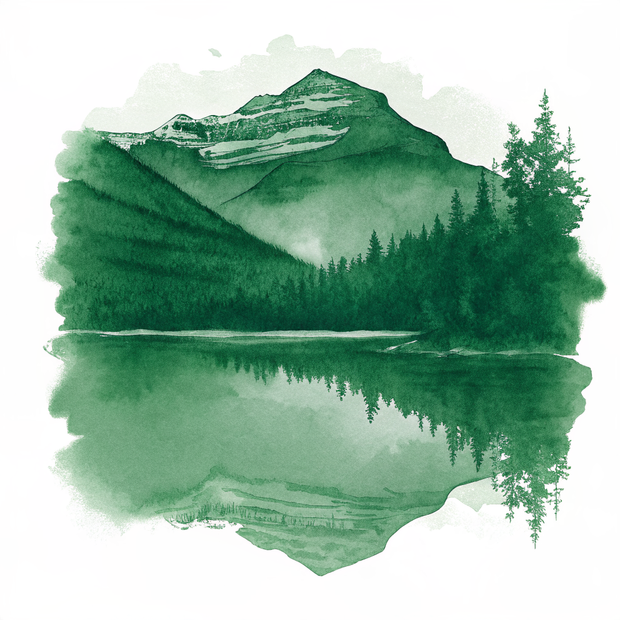
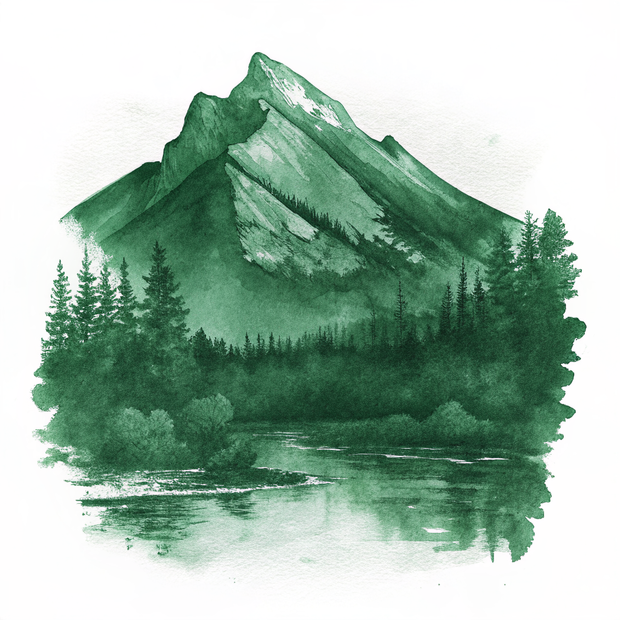
To help you bring a piece of your journey home, we've put together this collection of watercolor studies from our time in Banff National Park, Canada. These are our favorite ways to keep the spirit of the trip alive.

Original Series Decorative Magnet

A lovely, high-res reminder for your fridge or workspace. This watercolor magnet is the perfect small token to remember your Banff National Park, Canada adventure.

Banff National Park, Canada | Moraine Lake | Original Series Decorative Magnet
Add to Collection / $18
Exclusive Series Artifact

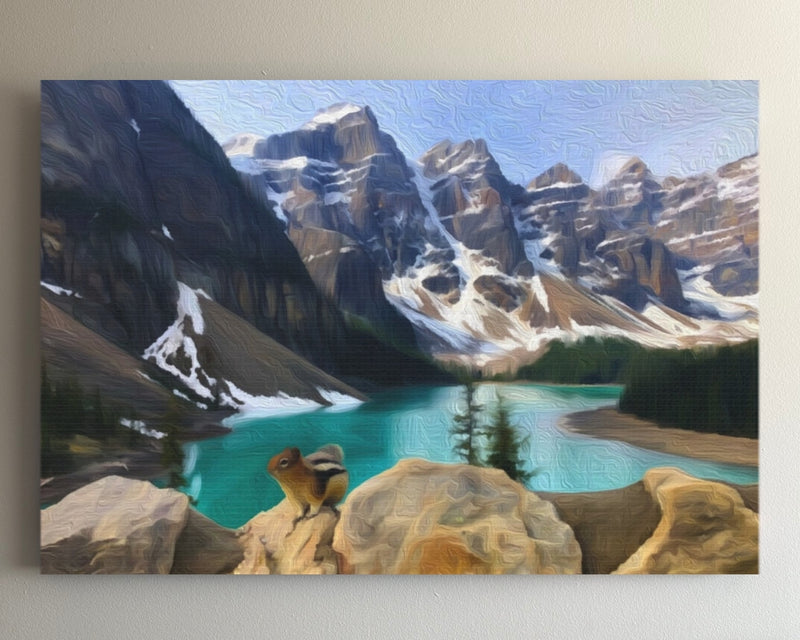
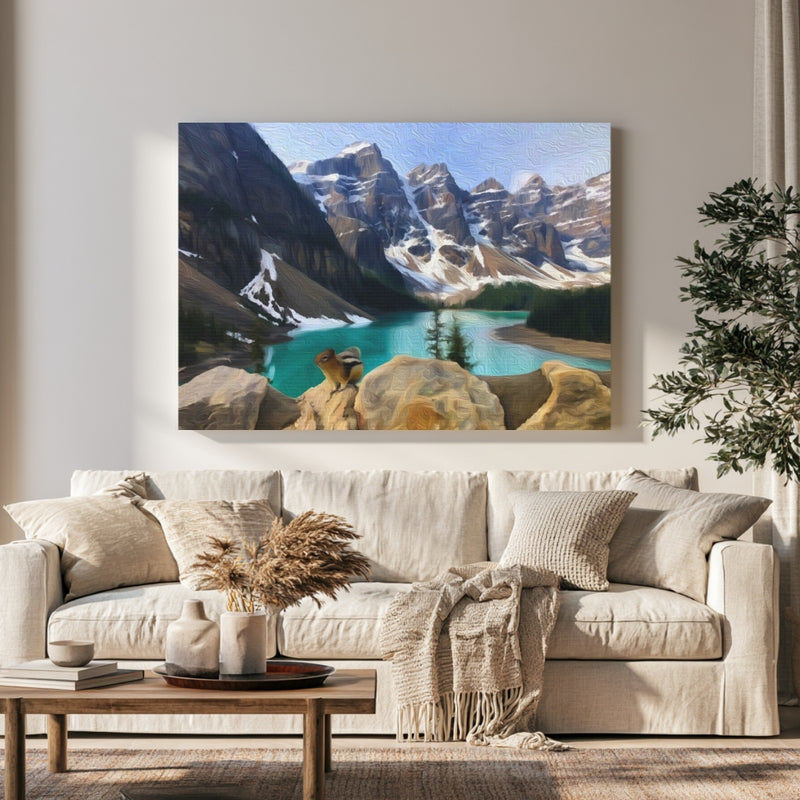
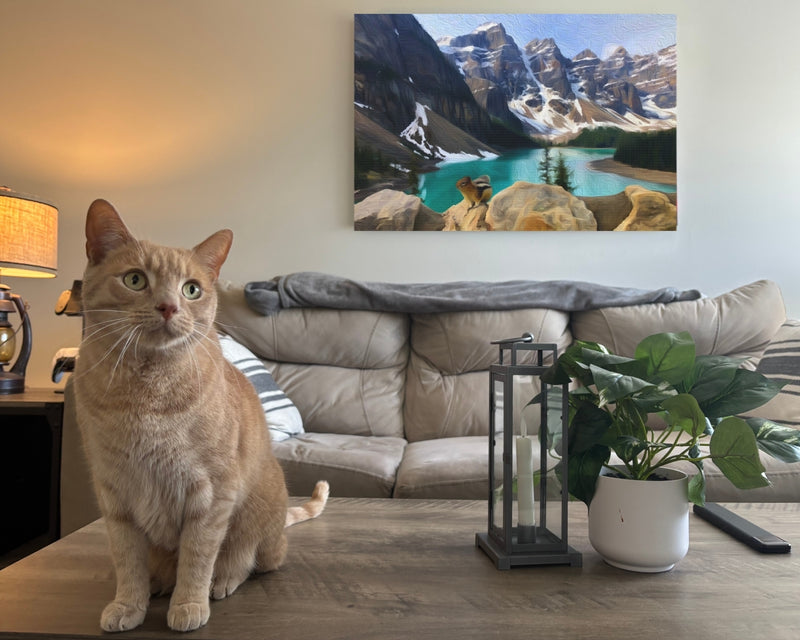
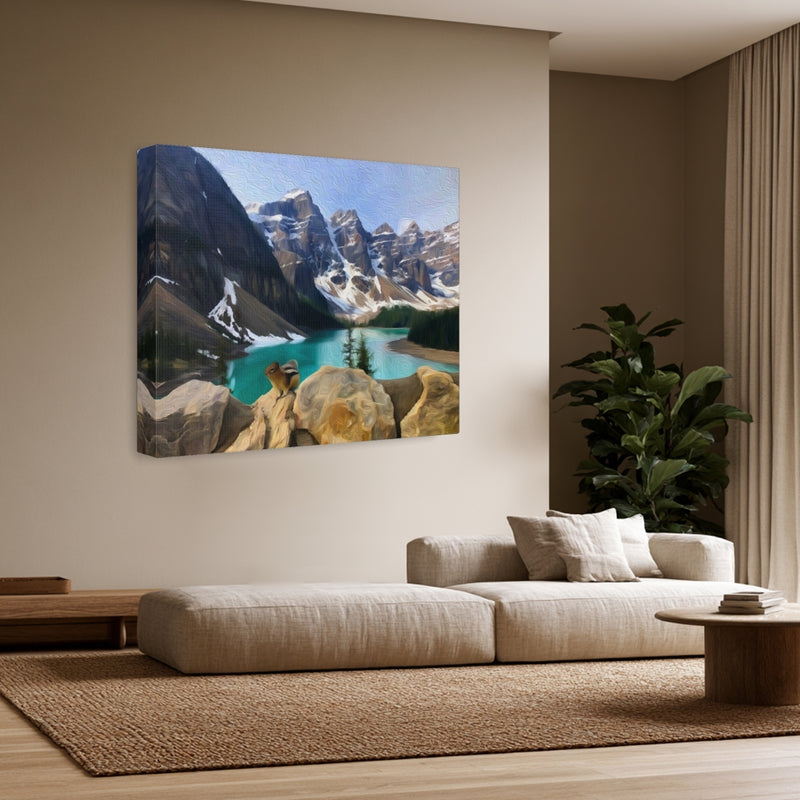
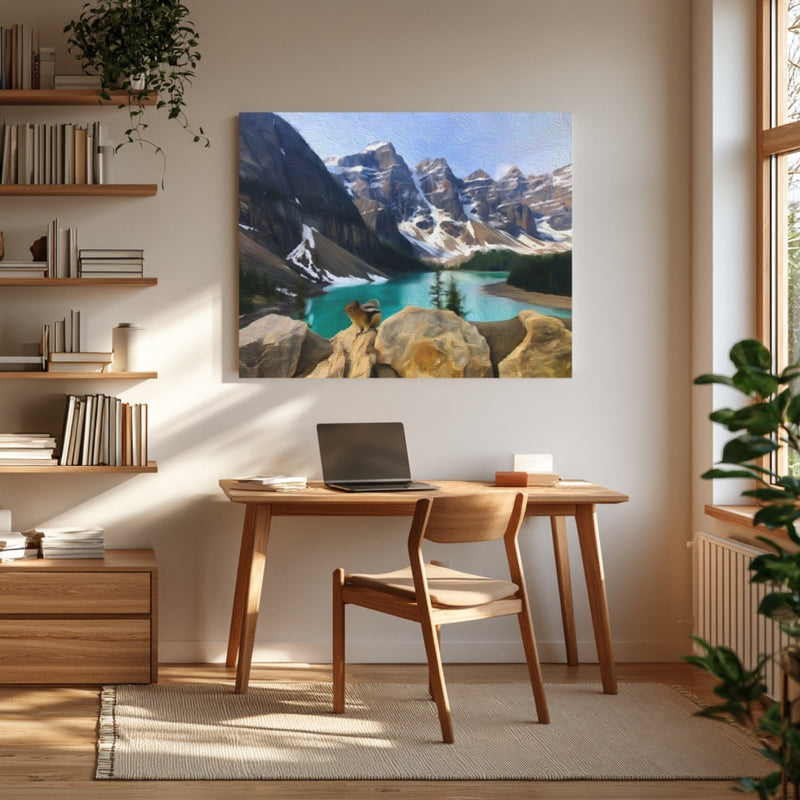
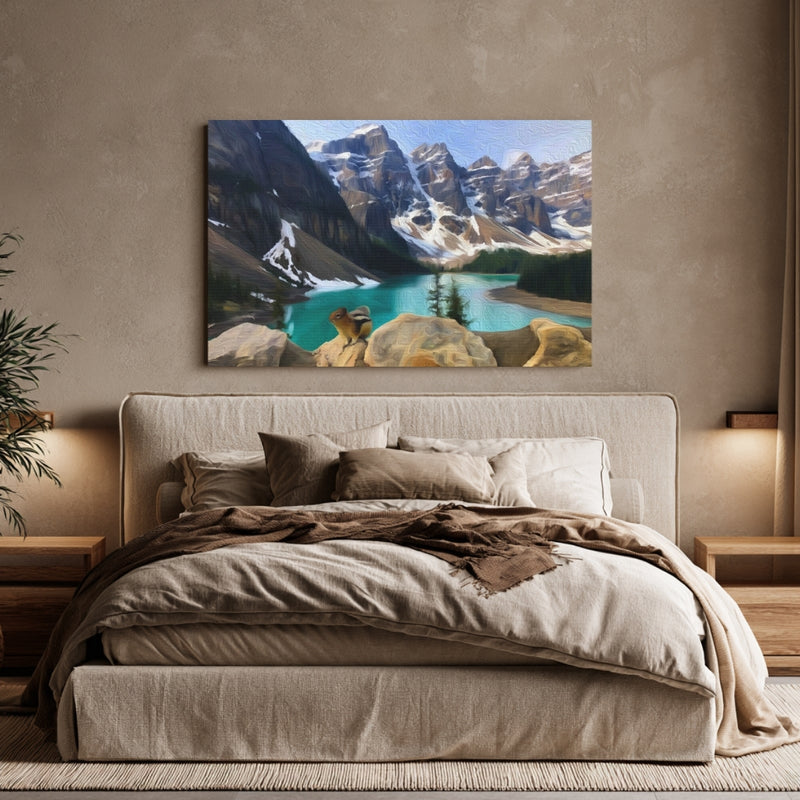
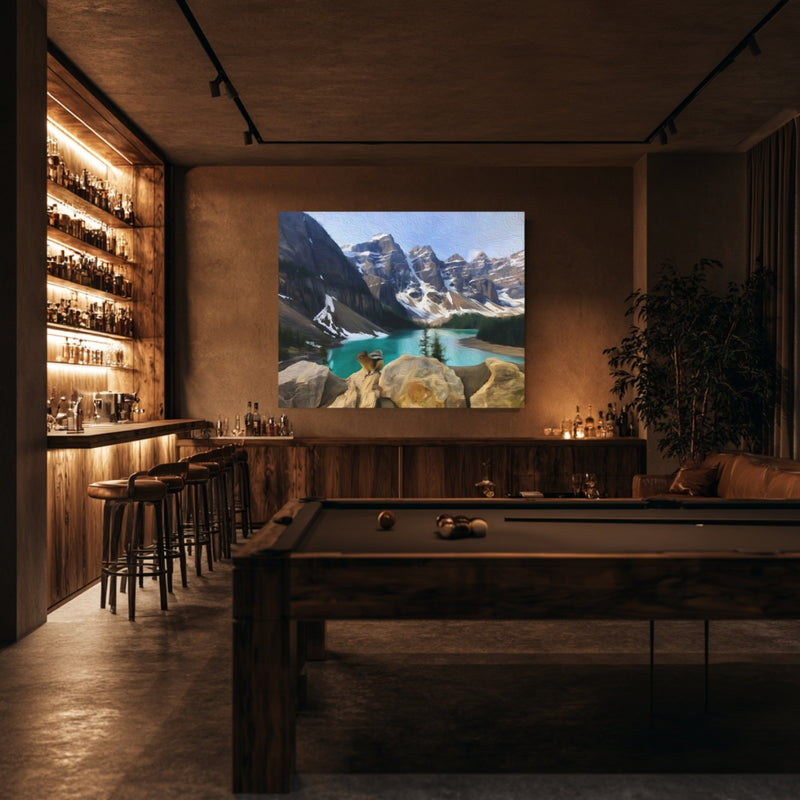
Original Series Gallery Canvas

This high-fidelity canvas is a beautiful way to anchor a room and keep your memories of Banff National Park, Canada fresh long after you've returned home.

Banff National Park Canada | Moraine Lake | Original Series Gallery Canvas detail Banff National Park Canada | Moraine Lake | Original Series Gallery Canvas detail Banff National Park Canada | Moraine Lake | Original Series Gallery Canvas detail Banff National Park Canada | Moraine Lake | Original Series Gallery Canvas detail
Add to Collection / $65

Original Series Hardboard Coaster

A wonderful companion for your morning coffee. This coaster captures the atmosphere of Banff National Park, Canada in a functional, beautiful way.

Banff National Park, Canada | Moraine Lake | Original Series Hardboard Coaster
Add to Collection / $18
Exclusive Series Artifact

The Spirit of the Land

Archival Note: Documented personally during our time in Banff National Park, Canada. While we leverage a global network of contributors to provide these high-fidelity visual artifacts, each selection is curated to reflect the specific, quiet frequencies we experienced on the ground. These textures serve as a formal study of the unhurried light and environmental character that defined our journey.

Banff National Park, Canada study No. 01
Banff National Park, Canada / 01 VIA / Louis Paulin
Banff Avenue provides a precise linear perspective, drawing the eye from the rhythmic brickwork of the town to the jagged, sedimentary layers of Cascade Mountain. A documentation of the exact alignment where the street appears to be claimed by the peak.
Banff National Park, Canada study No. 02
Banff National Park, Canada / 02 VIA / Matthew Fournier
A cluster of primary-colored canoes rests upon the electric, "rock flour" turquoise of Moraine Lake. The stillness of the water is held by the dense evergreens and the ancient, jagged limestone of the Ten Peaks—a study in the vibrancy of human presence against geological silence.
Banff National Park, Canada study No. 03
Banff National Park, Canada / 03 VIA / Kazden Cattapan
A bighorn ram stands poised at the threshold of the mountain road. This study captures the tactile textures of the animal’s coat against the fractured, ancient limestone walls that define the Banff corridor.

Where to wander

Archival Note: These recommendations were curated personally during our time in Banff National Park, Canada to capture the textures that defined the quiet frequencies of the trip. Every entry here is a place we genuinely love; we hope these notes inspire you to wander off the main path and discover the same stillness we found on the ground.

Local Cuisine Spotlight
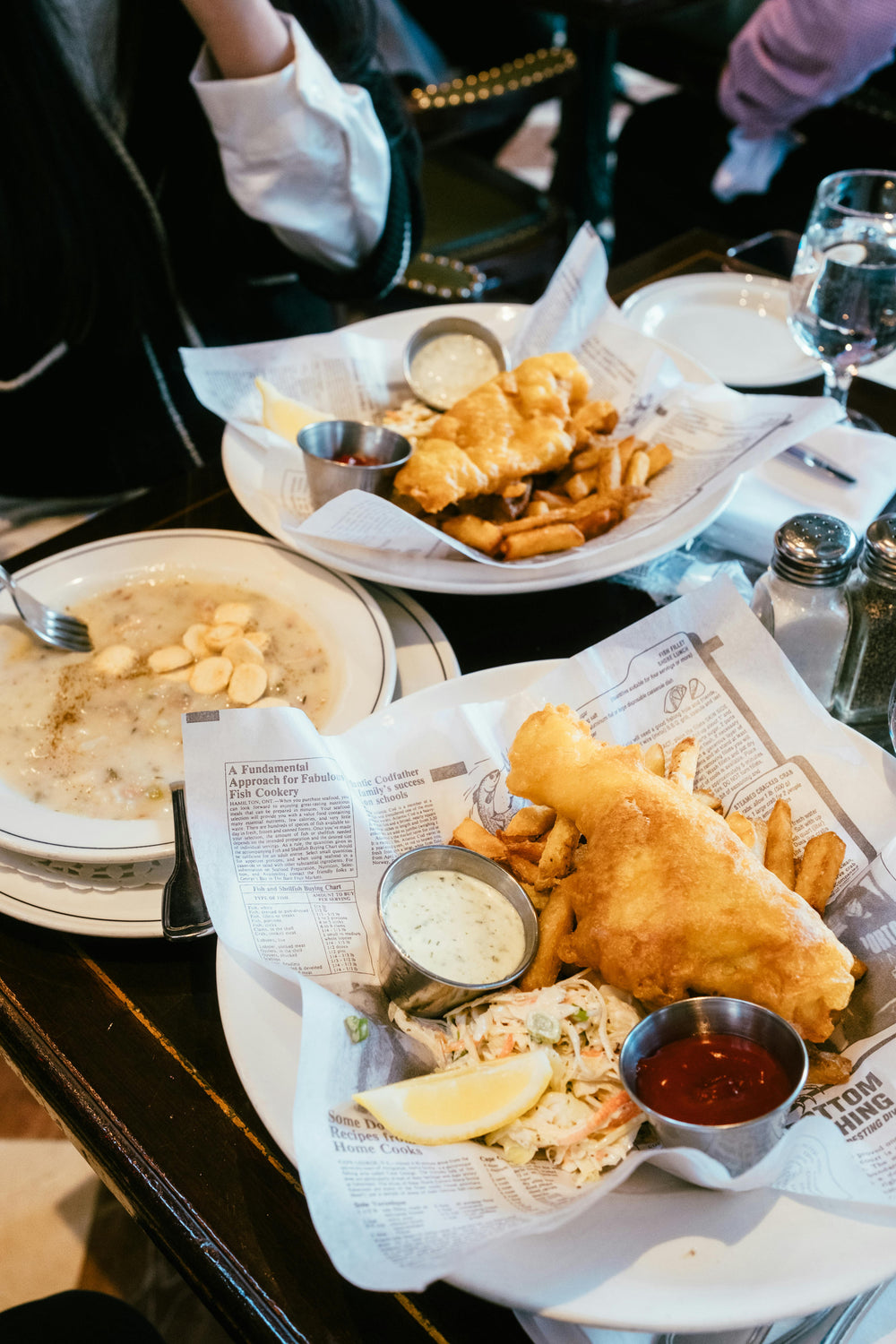
In the dim warmth of a Bow Valley tavern, the day concludes with golden-battered fillets and a bowl of creamy chowder. A simple, grounding ritual; a study of sensory contrast against the jagged cold of the mountains waiting just outside the glass.
Credits: Wendy Housholder
Local cuisine study in Banff National Park, Canada

☕︎ Local Flavor

Park Distillery Glacier-to-Glass Experience

Rating: 4.8★ | Price: $$$ | Coordinates: 51.1785° N, 115.5705° W

Unearth the alchemical relationship between geology and spirit during a guided session within the town's only operational distillery. The process utilizes hand-milled grains and water sourced directly from high-altitude glaciers that has been naturally filtered through ancient limestone deposits. This site serves as a sensory archive, documenting the specific mineral profile of the Bow Valley’s hydro-history.

View Entry Details

Taste of Banff Food Tour

Rating: 5.0★ | Price: $$ | Coordinates: 51.1784° N, 115.5708° W

Navigate the pedestrian arteries of the townsite to uncover the culinary legacies that have sustained mountain travelers for over a century. The tour highlights the intentional use of regional bison, elk, and cold-hardy root vegetables served within structures that maintain their original 20th-century timber-frame integrity. This experience acts as a mobile manuscript, documenting the transition of Banff from a rugged outpost to a sophisticated center of alpine gastronomy.

View Entry Details

Blend Your Own Gin Experience in Banff

Rating: 5.0★ | Price: $$ | Coordinates: 51.1785° N, 115.5705° W

Discover the meticulous art of botanical infusion within a distillery that draws its soul from the surrounding spruce and cedar forests. Participants engage with hand-selected juniper and high-altitude flora, balancing these elements against a base of pure spirit filtered through local glacial silts. This workshop is a vital piece of the city's puzzle, preserving the lineage of artisanal craftsmanship while serving as a physical manuscript of the region's unique ecosystem.

View Entry Details

Banff Town Walking Tour

Rating: 5.0★ | Price: $$ | Coordinates: 51.1762° N, 115.5703° W

Unearth the foundational layers of the Bow Valley as you traverse the grid-patterned streets laid out by early park administrators. The narrative focuses on the Rundle stone masonry and Gothic Revival influences that define the town's most prominent historical façades. This walking study is a vital anchor for the city's identity, preserving the lineage of early conservationists and the architectural ambition of the Canadian Pacific Railway.

View Entry Details

🛌︎ Boutique Stays

The Rimrock Resort Hotel

Rating: 4.6★ | Price: $$$ | Coordinates: 51.1495° N, 115.5562° W

Observe the dramatic verticality of the Rockies from this tiered structure carved into the side of Sulphur Mountain. The hotel’s interior design emphasizes the use of dark woods and polished stone, echoing the rugged textures of the surrounding alpine forest. It serves as an architectural study in elevation, bridging the gap between the townsite below and the thermal springs above.

View Entry Details

Buffalo Mountain Lodge

Rating: 4.5★ | Price: $$$ | Coordinates: 51.1834° N, 115.5552° W

Inhabit a sanctuary of heavy timber and fieldstone located on the quiet slopes of Tunnel Mountain. The lodge utilizes massive Douglas fir beams and post-and-beam construction to evoke the rustic permanence of early 20th-century mountain refuges. It remains a crucial piece of the Banff puzzle, preserving the aesthetic of the "great camps" while offering a grounded, Zen-influenced retreat.

View Entry Details

Fairmont Banff Springs

Rating: 4.7★ | Price: $$$ | Coordinates: 51.1644° N, 115.5619° W

Ascend the stone staircases of the "Castle in the Rockies," a Scottish Baronial masterpiece commissioned by the Canadian Pacific Railway in 1888. The architecture features massive granite walls, Rundle stone masonry, and the iconic Painter Tower, which once stood as the tallest structure in the nation. This hotel is a physical manuscript of Canada’s grand railway era, documenting the transition from wilderness outpost to international destination.

View Entry Details

Mount Rundle Suites at Moose Hotel

Rating: 4.8★ | Price: $$$ | Coordinates: 51.1798° N, 115.5714° W

Examine the evolution of mountain modernism through the use of warm cedar, native stone, and expansive glass that frames the limestone peaks. The hotel integrates traditional alpine motifs with contemporary spatial design, reflecting the modern traveler’s desire for both comfort and context. This site acts as a bridge in the city’s architectural lineage, blending historical materiality with 21st-century form.

View Entry Details

📍︎ Field Study

Banff Gondola & Sulphur Mountain Boardwalk

Rating: 4.7★ | Price: $$$ | Coordinates: 51.1477° N, 115.5556° W

Surmount the ridges of Sulphur Mountain to reach the meticulously preserved 1903 meteorological station. The summit boardwalk navigates a fragile alpine ecosystem while providing a vantage point to study the tectonic folding of the surrounding limestone ranges. This excursion offers a physical narrative of early scientific ambition and the preservation of high-altitude biodiversity.

View Entry Details

Lake Louise & Victoria Glacier

Rating: 4.9★ | Price: $$ | Coordinates: 51.4177° N, 116.2169° W

Contemplate the staggering scale of the Victoria Glacier from the shoreline of Lake Louise, a site that has anchored the Canadian mountaineering tradition since 1890. The adjacent chateau architecture reflects a century of aesthetic shifts, from modest wooden lodge to a sprawling stone icon. It remains a vital archival site, documenting the retreat of the glaciers and the birth of North American alpine tourism.

View Entry Details

Banff Sightseeing & Wildlife Tour

Rating: 4.8★ | Price: $$ | Coordinates: 51.1827° N, 115.5642° W

Navigate the limestone corridors of the Bow Valley to observe the ancestral migration patterns of elk, bighorn sheep, and grizzly bears within their native subalpine habitat. The excursion emphasizes the delicate ecological equilibrium maintained by the park’s wildlife overpasses and the historical preservation of the region's natural corridors. This journey serves as a vital piece of the city's puzzle, documenting the transition from a resource-driven frontier to a global sanctuary for conservation and biodiversity.

View Entry Details

Johnston Canyon Icewalk

Rating: 4.8★ | Price: $$ | Coordinates: 51.2455° N, 115.8398° W

Navigate a steel catwalk cantilevered over a frozen limestone chasm to witness the vertical architecture of suspended ice pillars. The journey reveals the intricate crystalline textures of the Lower and Upper Falls, which transform into massive cobalt-blue sculptures throughout the sub-zero winter months. This excursion serves as a physical manuscript of the canyon’s hydraulic power, documenting the seasonal transition from a turbulent waterway to a static, crystalline archive of the Canadian winter.

View Entry Details

Typography

Archival Note: We have personally documented these geographic specs for Banff National Park, Canada to ensure every watercolor study is anchored in real-world data. By cataloging the precise elevation, light cycles, and historical epochs, we provide a technical foundation that justifies the atmospheric stillness captured in our visual artifacts.

Botanical and pigment specimen study for Banff National Park, Canada Colors of Banff National Park, Canada
Coordinates
51.1784° N, 115.5708° W — Alberta, Canadian Rocky Mountain Parks
Historical Epoch
Post-Glacial / Canadian Pacific Railway Era
Elevation
1,383–2,285 m / 4,537–7,497 ft — townsites to alpine passes along the Icefields Parkway
Atmosphere
Alpine Tundra
Observation Hour
06:15 — Alpenglow on the Rockies
Primary Pigment
Glacial Azure (#76A5AF) and Moraine Pine (#3B5249)
Best Time to Visit
June through August — all trails are snow-free, the glaciers are at their most vivid, and the Icefields Parkway is fully open and drivable
Avoid Visiting
November through April — most trails are buried under several meters of snow, road closures are frequent, and temperatures drop to −30°C

The Local Tongue

Language is the invisible architecture of Banff National Park, Canada. These entries document the regional vocabulary—capturing the "texture" of local speech that standard translations often miss. Hand-curated expressions reflecting the specific spirit and daily rhythm of the region.
Archival study of English cultural texture

via / Ali Kazal

Primary Language English
Regional Dialect Western Canadian (Alberta)

Alpenglow

Alpenglow is the specific optical phenomenon in which the peaks catch the last or first light of the day in a luminous pink-to-amber glow while the valley below is already in shadow — a daily event in Banff that is most visible from the Vermilion Lakes at sunrise and from the Bow Valley Parkway at sunset, and that photographers plan their entire days around.

Rock Flour

Rock flour is the ultra-fine glacial silt ground from bedrock by the movement of glaciers that gives Moraine Lake and Lake Louise their extraordinary turquoise color — the particles are so fine they remain suspended in the meltwater and scatter the blue-green spectrum of light in a way that changes with the season as snowmelt peaks and recedes.

Chinook

The Chinook is the warm, dry föhn wind that descends the eastern slopes of the Rockies and can raise temperatures in Banff by 20 degrees in a matter of hours, melting snow and creating the brief midwinter thaws that locals call "the gift of the mountains" and that produce the dramatic contrasts of bare ground and deep snowpack visible from the Trans-Canada Highway.

Wait! before you go...

Before you head over to Banff National Park, Canada, we wanted to share a few basic tips we picked up along the way. These notes cover the simple things—like how to get around or what to do about cash—so you can spend less time worrying and more time just enjoying the place.
🚲 Getting Around The Roam Transit bus network connects Banff town, Lake Louise, and the major trailheads with reliable, scenic service that runs year-round. A rental car is still the most flexible option for reaching the Icefields Parkway, Moraine Lake (access restricted in peak season — pre-booking the shuttle is essential), and the more remote reaches of the park.
⚖️ Cash or Card 85% Card, 15% Cash. Cards are accepted everywhere in Banff town and at all major park facilities. A small amount of cash is useful for the Banff Airporter shuttle, local farmers market vendors, and trail parking meters in the backcountry zones where cell service is unreliable.
☁️ Good to Know The park operates on a genuine wildlife-first ethic — elk, bears, coyotes, and bighorn sheep move freely through town and across roads, and the cultural expectation is to pull over, stay in your vehicle, and give them the right of way. The standard practice is 100 meters from bears and 30 meters from all other large wildlife, enforced by Parks Canada wardens.
🏧 ATMs Bank of Montreal and Royal Bank of Canada ATMs are available on Banff Avenue in town and at the Lake Louise Village complex. ATM access drops to zero once you leave the main corridor — withdraw sufficient cash before heading to the Icefields Parkway or the backcountry campgrounds where the nearest ATM is a two-hour drive.
💳 Currency The Canadian Dollar (CAD) is the currency. Most prices in Banff run 15–25% higher than comparable services in Canadian cities due to the park premium. Tipping is expected at 15–20% for guides, restaurant servers, and shuttle drivers. The US Dollar is widely accepted informally but at unfavorable rates.
🔌 Plugs Type A and B (120V, 60Hz) — standard North American plugs throughout. No adapters needed for US or Mexican devices. European and Australian visitors will need a Type C/E/F or Type I adapter respectively. Power is reliable in town and at all Parks Canada campgrounds with electrical hookups.
🛡️ Safety Bear spray is not optional in Banff — it is the standard kit for any trail longer than a day hike and is available for rent from most outfitters in town. The weather changes rapidly at elevation; afternoon thunderstorms are common from June through August, and the temperature on exposed ridgelines can drop 15 degrees below the valley floor.
✈️ Airports Calgary International (YYC) is the primary gateway — 1.5 hours east on the Trans-Canada Highway. The Banff Airporter shuttle runs multiple daily departures and is the easiest option without a rental car. Edmonton International (YEG) is a longer 4-hour drive through the foothills and is typically used only when Calgary fares are significantly higher.