Shop the Collection

To help you build your own global archive, we've prepared this collection of watercolor studies from our research into Bagan, Myanmar. These artifacts are designed to bring the stillness of this corner of the world into your home.

Original Series Decorative Magnet

A personal study of Bagan, Myanmar, captured in high-fidelity watercolor and prepared for your collection.

Bagan, Myanmar | Ancient Temples of Bagan | Original Series Decorative Magnet
Add to Collection / $18
Exclusive Series Artifact

Original Series Gallery Canvas

This high-fidelity canvas is a beautiful way to anchor a room and keep your memories of Bagan, Myanmar fresh long after you've returned home.

Bagan, Myanmar | Ancient Temples of Bagan | Original Series Gallery Canvas detail Bagan, Myanmar | Ancient Temples of Bagan | Original Series Gallery Canvas detail Bagan, Myanmar | Ancient Temples of Bagan | Original Series Gallery Canvas detail Bagan, Myanmar | Ancient Temples of Bagan | Original Series Gallery Canvas detail
Add to Collection / $65

Original Series Hardboard Coaster

A personal study of Bagan, Myanmar, captured in high-fidelity watercolor and prepared for your collection.

Bagan, Myanmar | Ancient Temples of Bagan | Original Series Hardboard Coaster
Add to Collection / $18
Exclusive Series Artifact

The Spirit of the Land

Archival Note: A curated field study of Bagan, Myanmar, prioritizing the specific atmospheric stillness of the region. These artifacts have been meticulously sourced from our global archival partners to represent the area's unique cultural frequency and environmental character. This selection serves as a formal observation for our ongoing global archive, vetted for its visual accuracy and archival merit.

Bagan, Myanmar study No. 01
Bagan, Myanmar / 01 VIA / Majkell Projku
The soft blush of early morning hangs between lavender and amber, catching the worn brick of a thousand-year-old stupas in a light that makes them look less like ruins and more like something still breathing. Dozens of hot air balloons drift in loose silence above the plain, unhurried, as if they belong to the same ancient patience as the temples below. It's the dirt path cutting through the foreground — ordinary, dusty, well-worn — that keeps the whole scene from feeling like a dream.
Bagan, Myanmar study No. 02
Bagan, Myanmar / 02 VIA / Hakan Nural
The golden afternoon light bathes the ancient brick stupas of Bagan in a warm, amber glow, casting long shadows across the red earth and lending the scene an almost timeless, dreamlike quality. Standing here, one would feel suspended between centuries — the slow, deliberate rhythm of the oxen breaking the soil contrasting with the eternal silence of the thousand-year-old temples rising from the plain. There is a profound stillness to this place, broken only by the soft creak of the wooden plow and the whisper of wind through the acacia trees, making it feel less like a moment in history and more like history itself, breathing.
Bagan, Myanmar study No. 03
Bagan, Myanmar / 03 VIA / Sebastien Goldberg
A lone figure stands atop an ancient brick stupa, gazing across the misty plain of Bagan as dawn bleeds a pale amber into the sky. What most eyes skip past is the delicate latticework of small arched niches running along the temple's terrace wall — each one a tiny hollow that once likely cradled a votive figure, now worn smooth by centuries of monsoon rain. The layered haze in the middle distance, where treeline and temple silhouettes dissolve into one another, gives the landscape the quality of an ink wash painting slowly being erased.

Where to wander

Archival Note: A curated field study of Bagan, Myanmar, prioritizing cultural relevance and archival merit. While we haven't touched down here yet, we've meticulously vetted these locations through our global network of contributors to ensure they represent the most authentic atmosphere for your own expedition.

Local Cuisine Spotlight
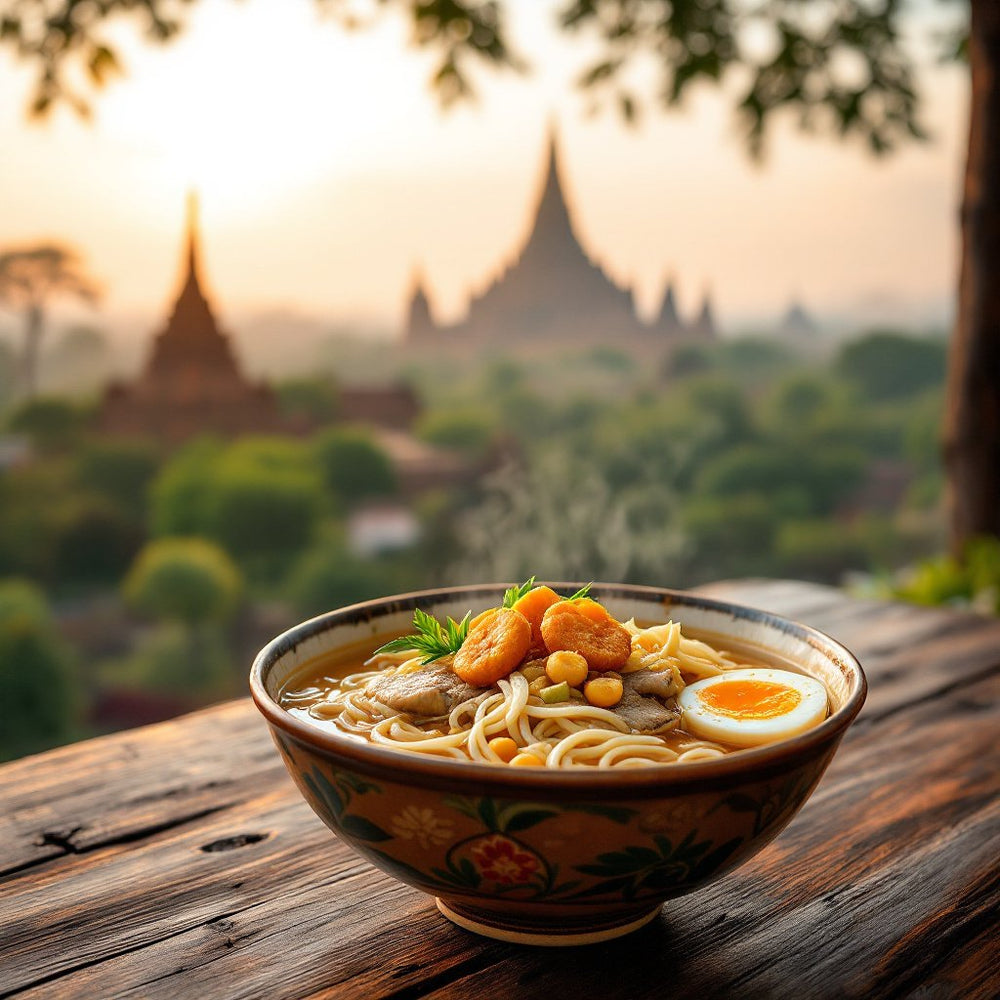
Mohinga, Myanmar's beloved breakfast noodle soup, steams gently against Bagan's ancient temple skyline. This rich, fish-based broth cradles silky rice noodles, a jammy soft-boiled egg, crispy fritters, and tender chickpeas. Every fragrant spoonful tells a story centuries deep.
Credits: THE PAINTED PASSPORT
Local cuisine study in Bagan, Myanmar

☕︎ Local Flavor

The Moon Restaurant

Rating: 5* | Price: $$ | Coordinates: 21.1701° N, 94.8655° E

The Moon has been feeding hungry temple-goers for years with its deeply flavorful Burmese curries slow-cooked in traditional clay pots each morning. The shan noodle salad here is bright, tangy and absolutely addictive, topped with crispy garlic and fresh herbs from the owner's garden. Dine on the open terrace under string lights while the warm breeze carries the scent of temple incense from nearby pagodas.

View Entry Details

Sarabha II Restaurant

Rating: 4* | Price: $$ | Coordinates: 21.1734° N, 94.8629° E

A longtime favorite among both locals and travelers, Sarabha II serves generous Burmese set meals that arrive in a beautiful array of small dishes simultaneously. The tea leaf salad is a must-order, offering an exciting textural contrast of crunchy nuts, fermented leaves, and zesty lime dressing. The welcoming owner often stops by tables to explain each dish, turning every meal into a warm cultural lesson.

View Entry Details

Weather Spoon's Bar & Restaurant

Rating: 4* | Price: $$ | Coordinates: 21.1758° N, 94.8601° E

Perched with panoramic views across the plain, this beloved spot is the perfect place to reward yourself after a long dusty day cycling between temples. The wood-fired pizzas might seem unexpected in Bagan, but they are genuinely excellent and pair wonderfully with cold local craft beers. Sunset here draws a crowd for good reason — the golden light washing over ancient spires is breathtakingly cinematic.

View Entry Details

Aroma 2 Indian Restaurant

Rating: 4* | Price: $ | Coordinates: 21.1712° N, 94.8667° E

Aroma 2 serves richly spiced Indian and Burmese fusion dishes that reflect Bagan's historically diverse cultural influences with every flavorful bite. The buttery garlic naan and fragrant lamb biryani are comfort food perfection after long mornings navigating dusty temple trails on two wheels. Portions are enormous and prices are incredibly gentle, making this a reliable favorite for travelers watching their budget without sacrificing flavor.

View Entry Details

🛌︎ Boutique Stays

Aureum Palace Hotel & Resort

Rating: 5* | Price: $$$$ | Coordinates: 21.1717° N, 94.8585° E

Nestled among ancient temples, Aureum Palace offers colonial-style villas with private pools overlooking the archaeological zone. Waking up to hot air balloons drifting past your terrace at sunrise is an experience you will never forget. The attentive staff arranges private e-bike tours and sundowner dinners beside illuminated pagodas.

View Entry Details

Bagan Lodge

Rating: 4* | Price: $$$ | Coordinates: 21.1689° N, 94.8601° E

Bagan Lodge blends traditional Burmese teak craftsmanship with modern comforts, creating a genuinely romantic atmosphere throughout the property. The rooftop viewing deck is one of the best spots in town to watch the famous balloon-dotted sunrise over thousands of pagodas. Generous breakfasts featuring local mohinga fish soup set you up perfectly for full days of temple exploration.

View Entry Details

Thazin Garden Hotel

Rating: 4* | Price: $$ | Coordinates: 21.1645° N, 94.8712° E

This charming boutique hotel is surrounded by lush tropical gardens and flowering frangipani trees that perfume the evening air beautifully. Rooms are spacious and decorated with locally made lacquerware and hand-woven fabrics that feel authentically Burmese. The friendly family-run atmosphere makes guests feel genuinely welcomed, and staff gladly share insider tips on hidden temples.

View Entry Details

Ostello Bello Bagan

Rating: 3* | Price: $ | Coordinates: 21.1723° N, 94.8648° E

Budget travelers will love this sociable hostel that organizes communal e-bike adventures through the temple plains each morning at dawn. The rooftop bar becomes a lively gathering spot each evening where solo travelers swap stories and temple recommendations over cold Myanmar Beer. Clean dorms and private rooms make it excellent value in one of Southeast Asia's most magical destinations.

View Entry Details

📍︎ Field Study

Ananda Temple

Rating: 5* | Price: Free | Coordinates: 21.1727° N, 94.8719° E

Ananda is arguably Bagan's most magnificent temple, a shimmering whitewashed masterpiece built in 1105 that still actively draws devoted Buddhist worshippers daily. Four enormous gilded standing Buddhas face each cardinal direction inside, their serene expressions appearing to change emotion as you move around them. Visiting at dawn when golden light floods the corridors and monks chant softly in side chapels is an experience of profound, lasting beauty.

View Entry Details

Shwesandaw Pagoda

Rating: 5* | Price: Included in Zone Pass | Coordinates: 21.1594° N, 94.8682° E

Shwesandaw's broad terraced steps climb to a commanding hilltop position, making it the most celebrated sunset-viewing pagoda across the entire archaeological zone. Hundreds of visitors gather here each evening, yet the shared silence that falls as the sun dips below the horizon feels genuinely communal and moving. Arriving early secures a prime terrace spot, and watching the hot air balloons extinguish one by one in the fading light is unforgettable.

View Entry Details

Dhammayangyi Temple

Rating: 5* | Price: Included in Zone Pass | Coordinates: 21.1560° N, 94.8748° E

The largest and most imposing temple in Bagan, Dhammayangyi dominates the flat plain with its enormous pyramid-like mass of perfectly laid dark brick. Built in the 12th century under King Narathu, its inner passageways contain mysterious bricked-up corridors that fuel endless local legends and historical speculation. Exploring its shadowy interior by torchlight while bats flutter overhead delivers a genuinely atmospheric and slightly spine-tingling adventure.

View Entry Details

Bagan Archaeological Museum

Rating: 4* | Price: $ | Coordinates: 21.1732° N, 94.8593° E

This well-curated museum provides essential historical context for everything you will see across the vast temple plains surrounding Bagan. Beautifully preserved Buddha images, stone inscriptions, and royal regalia reveal the sophistication of the Pagan Empire at the height of its remarkable cultural achievements. Spending a quiet hour here before embarking on temple explorations genuinely deepens your appreciation and transforms ancient ruins into vivid, meaningful stories.

View Entry Details

Typography

Archival Note: A formal technical study of Bagan, Myanmar—archiving the coordinates, elevation, and environmental data that define the region. This data serves as a vital record for our ongoing global field study, allowing us to reconstruct the regional atmosphere with archival precision before our physical arrival.

Botanical and pigment specimen study for Bagan, Myanmar Colors of Bagan, Myanmar
Coordinates
21.1720° N, 94.8610° E — Ancient Pagan plain, Mandalay Region, central Myanmar, eastern bank of the Irrawaddy River
Historical Epoch
The Pagan Kingdom flourished from the 9th to 13th centuries, commissioning over ten thousand religious structures across this plain before the Mongol invasions of 1287 ended its golden age and left the temples to the wind.
Elevation
55-90 m / 180-295 ft - Low alluvial plain along the Irrawaddy River valley, with very little vertical relief across the archaeological zone
Atmosphere
BSh - Hot semi-arid steppe. Bagan is dry and hot most of the year, with a brief monsoon season from June to October that brings humidity and occasional flooding to the plain.
Observation Hour
06:00 - The first hour after sunrise bathes Bagan's terracotta temples in a deep amber glow. Mist lingers over the plain and shadows stretch long between the spires, making every direction a composition.
Primary Pigment
Terracotta Dust (#C2724F) and Saffron Horizon (#E8A84C)
Best Time to Visit
November through February - Cool, dry, and clear with manageable heat, perfect for exploring temples on foot or by e-bike.
Avoid Visiting
June through September - Monsoon season brings heavy rain, humidity, and heat that make temple exploration uncomfortable and roads muddy.

The Local Tongue

Language is the invisible architecture of Bagan, Myanmar. These entries document the regional vocabulary—capturing the "texture" of local speech that standard translations often miss. Hand-curated expressions reflecting the specific spirit and daily rhythm of the region.
Archival study of Burmese cultural texture

via / Robert Collins

Primary Language Burmese
Regional Dialect Central Burmese (Mandalay-Bagan dialect region)

Mingalaba (မင်္ဂလာပါ)

Mingalaba means auspiciousness or a greeting wishing good fortune upon another. It is the standard hello across Myanmar, but in Bagan it carries extra warmth when spoken by a temple caretaker handing a visitor a small bouquet of jasmine at a pagoda entrance in the early morning cool.

Zedi (စေတီ)

Zedi refers to a stupa or bell-shaped reliquary tower, and in Bagan the word becomes almost synonymous with the landscape itself. Standing between thousands of these whitewashed and terracotta structures at dusk, the air thick with the scent of dried grass and old stone, the word feels less like a label and more like a prayer.

Bagan (ပုဂံ)

Bagan, derived from the older Pyu name Arimaddanapura, carries within it the full weight of an empire that once ruled much of mainland Southeast Asia. Locals speak the name with a quiet pride that a first-time visitor might only begin to understand when they climb a temple staircase and see the full plain unfurl below them in the amber light.

Wait! before you go...

Before you head over to Bagan, Myanmar, we’ve audited the essential data points for this corner of the world. These notes cover the logistics—from currency ratios to transit hubs—to help you navigate the landscape with clarity.
🚲 Getting Around Within Bagan, electric bikes and horse carts are the most practical and atmospheric ways to move between temple sites. Taxis and hired drivers are available for longer journeys toward Nyaung-U town or the airport, and cycling is popular in the cooler months.
⚖️ Cash or Card Bagan is predominantly a cash economy. US dollars in clean, unmarked bills were historically the preferred foreign currency, though the kyat is used for most local transactions. Card acceptance is very limited outside of larger hotels, and ATMs can be unreliable, so carrying sufficient cash from a larger city is strongly advised.
☁️ Good to Know Removing shoes and socks before entering any temple or pagoda is non-negotiable and deeply respected. Visitors who forget or hesitate are gently but firmly reminded by locals, and approaching this ritual with genuine care rather than impatience goes a long way in demonstrating respect for a living religious landscape.
🏧 ATMs ATMs exist in Nyaung-U near Bagan and at some larger hotels, but machine outages, withdrawal limits, and network failures are common. Travelers are strongly advised to arrive with sufficient cash in US dollars or kyat obtained in Yangon or Mandalay rather than relying on local ATM access.
💳 Currency The Myanmar kyat (MMK) is the official currency, though US dollars have historically been accepted at hotels and larger businesses. Since the 2021 coup, currency controls and exchange rate volatility have made the financial landscape unpredictable, and travelers should research current conditions carefully before arriving.
🔌 Plugs Myanmar uses Type C, D, and F outlets at 230V/50Hz. A universal adapter is recommended as socket types can vary even within the same guesthouse.
🛡️ Safety Bagan itself is generally safe for travelers and petty crime is uncommon in the archaeological zone. However, Myanmar has faced significant political instability since the 2021 military coup, and travelers should monitor government advisories closely, avoid political gatherings, and keep a low profile in public spaces beyond the temple areas.
✈️ Airports Nyaung-U Airport (NYU) serves Bagan directly with domestic flights from Yangon, Mandalay, and Heho, and is located approximately 3 km from the main hotel cluster. International travelers typically connect through Yangon International Airport (RGN), the country's primary international gateway.

Behind The Scenes

Nathan

Note from the Founder

Hey, did you know this fun fact about Bagan, Myanmar? Bagan's archaeological zone was inscribed as a UNESCO World Heritage Site in 2019. At its peak, the Pagan Kingdom is estimated to have built over ten thousand religious structures across this single plain between the 9th and 13th centuries.
Thank you for exploring the Bagan, Myanmar series with us. We hope these notes have inspired you to add this incredible destination to your own passport—we are so glad you're here. — Nathan

Some of our Favorites